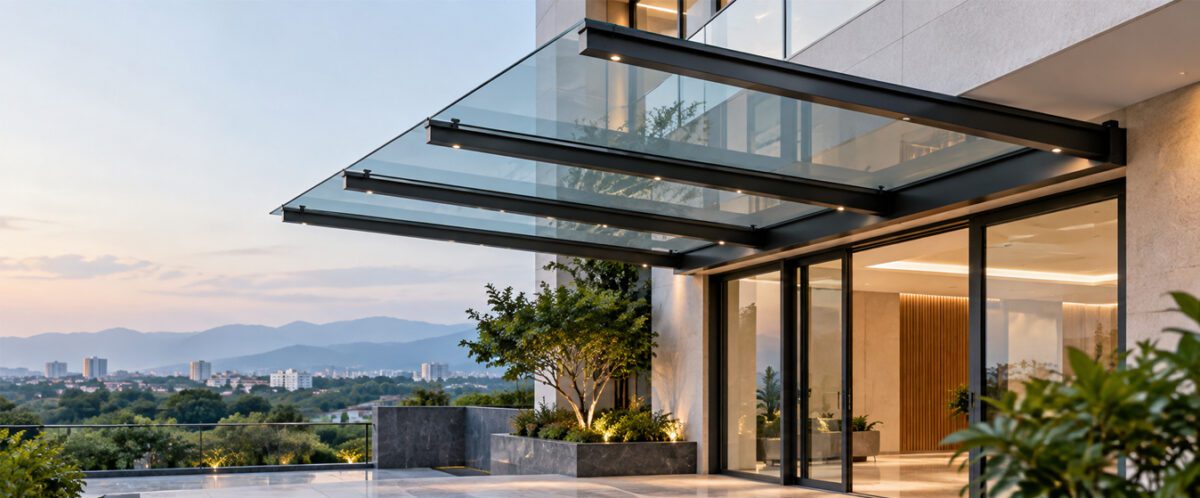
In modern architecture, facades play a defining role in how a building performs, how it is perceived, and how efficiently it responds to environmental conditions. As buildings grow taller, denser, and more complex, the choice between different facade systems becomes a critical design decision rather than a purely aesthetic one.
Among the most discussed options today are aluminium curtain walls and traditional wall systems. Both serve the essential purpose of enclosing a building, yet they differ significantly in structure, behaviour, and performance. For architects, developers, and planners, understanding these differences is essential, particularly at the early stages of design when long-term outcomes are still being shaped.
This blog takes a neutral, comparison-led approach to explain how aluminium curtain walls and traditional walls function, where each system performs best, and how they align with the demands of modern architecture. Rather than recommending one solution, the aim is to help readers make informed decisions based on project context, scale, and performance expectations.
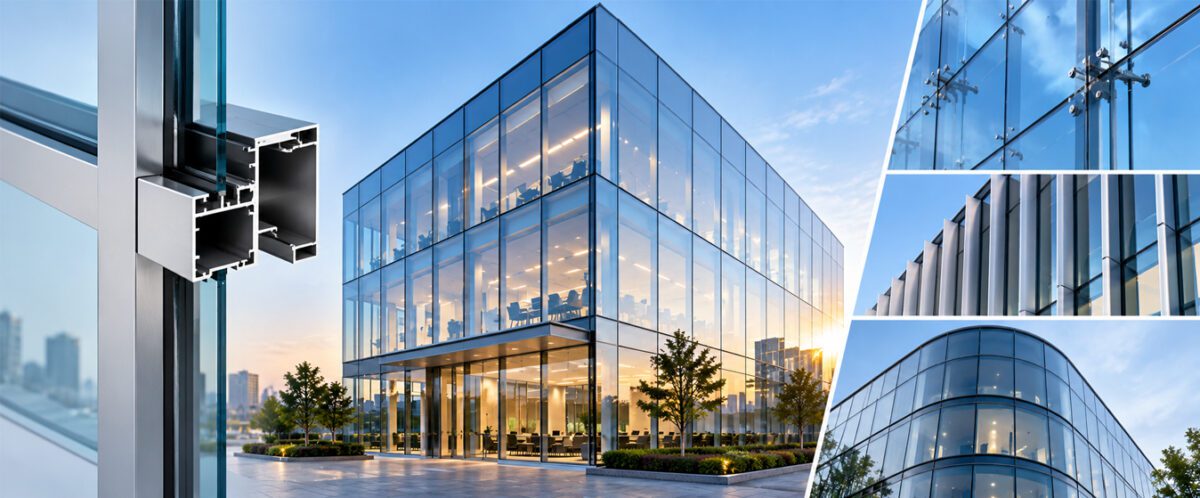
An aluminium curtain wall is a non-load-bearing facade system that is fixed to the structural frame of a building. It does not support the building’s floors or roof; instead, it acts as an external envelope that protects the interior from wind, rain, and temperature variations. These systems are typically composed of aluminium framing combined with glass, metal panels, or other lightweight infill materials.
As an exterior curtain wall system, it is designed to accommodate movement caused by wind pressure, thermal expansion, and structural sway. Because aluminium is lightweight and strong, it allows for large glazed surfaces without adding excessive load to the building structure. This characteristic has made curtain walls a preferred choice for high-rise and large commercial buildings.
Traditional walls include load-bearing walls and infill walls constructed using materials such as brick, stone, concrete blocks, or reinforced concrete. In many buildings, these walls form an integral part of the structural system, carrying vertical loads from floors and roofs while also providing enclosure.
In some modern constructions, traditional walls are combined with cladding systems applied directly to the structure. These façades rely on the mass and thickness of the wall for stability, insulation, and durability. While traditional walls have been used successfully for centuries, their behaviour and limitations become more apparent as buildings increase in height and complexity.
One of the most fundamental differences between aluminium curtain walls and traditional walls lies in how they interact with the building’s structure.
Curtain walls are designed to transfer their own weight and environmental loads back to the main structural frame through anchors and brackets. Because they are non-load-bearing, they reduce the overall dead load on foundations. This structural efficiency becomes especially important in high-rise buildings, where excessive weight can significantly increase foundation size and cost.
Traditional walls, on the other hand, carry both their own weight and additional structural loads. While this can be advantageous in low-rise buildings, it becomes a constraint in taller structures. Masonry walls are rigid by nature and may be more susceptible to cracking when exposed to building movement caused by wind or seismic forces.
From a performance standpoint, curtain wall systems are engineered to accommodate movement through expansion joints and flexible connections. This adaptability allows them to perform consistently under dynamic conditions, which is one reason many curtain wall manufacturers focus heavily on engineering precision rather than just material supply.
Facade systems strongly influence how a building is experienced visually, both from the outside and the inside. Aluminium curtain walls have become closely associated with modern architectural expression due to their ability to create clean lines, transparency, and seamless surfaces.
Because curtain walls are not restricted by wall thickness or load-bearing requirements, they offer greater design freedom. Architects can incorporate large spans of glass, curved façades, and modular patterns that would be difficult to achieve with traditional masonry. This flexibility supports contemporary design approaches that prioritise openness, light, and visual continuity.
Traditional walls tend to create a more solid and grounded architectural language. Openings must be carefully sized and positioned to maintain structural integrity, often resulting in smaller windows and heavier elevations. While this aesthetic suits certain architectural styles and contexts, it can limit creative freedom in modern commercial developments where visual impact and transparency are valued.
Access to natural light has a direct impact on occupant comfort, productivity, and energy consumption. Facade systems play a central role in determining how daylight enters a building.
Aluminium curtain walls allow for high window-to-wall ratios, enabling daylight to penetrate deeper into interior spaces. This reduces reliance on artificial lighting during daytime hours and enhances the visual quality of workspaces and public areas. In commercial buildings, this daylight-driven design approach is often linked to improved occupant well-being.
Traditional walls, by contrast, typically rely on punched openings. While these openings can be designed thoughtfully, they naturally limit the amount of daylight that enters the building. As a result, deeper floor plates may require additional artificial lighting, particularly in larger structures.
The interior experience created by a façade is not solely about brightness. Visual connection to the outdoors, glare control, and consistency of light all contribute to how spaces are perceived. Curtain wall systems provide more opportunities to fine-tune these factors through glazing selection and façade orientation.
Energy performance is one of the most important considerations in modern architecture, and façade choice has a direct influence on heating and cooling demand.
Curtain wall systems rely heavily on advanced glazing technologies to achieve thermal efficiency. Insulated glazing units, Low-E coatings, and airtight sealing systems help control heat transfer while allowing light to pass through. When designed correctly, an exterior curtain wall system can balance daylight access with thermal comfort.
However, performance depends on careful planning. Large glazed areas can lead to excessive heat gain if shading, orientation, and glass selection are not properly addressed. This is why experienced aluminium curtain wall manufacturers place strong emphasis on façade engineering rather than treating curtain walls as purely aesthetic elements.
Traditional walls offer thermal mass, which can help stabilise indoor temperatures by absorbing and releasing heat slowly. In certain climates and building types, this characteristic can be beneficial. However, traditional walls often require additional insulation layers to meet modern energy standards, especially when window sizes are increased.
Ultimately, thermal performance is not determined by facade type alone. Design intent, detailing, and execution quality play a decisive role in how both systems perform over time.
Construction methodology is another area where the differences between curtain walls and traditional walls become evident.
Curtain wall systems are often prefabricated off-site under controlled conditions. Components are then transported to the site and installed in a relatively short timeframe. This approach allows buildings to be enclosed earlier, enabling interior work to proceed regardless of external weather conditions. For large commercial projects, this can result in significant time savings.
Traditional wall construction is generally more sequential. Masonry work depends heavily on on-site labour and weather conditions, which can extend project timelines. While this approach is familiar and well-established, it may not align with the speed requirements of large-scale developments.
As a result, many developers working on complex projects engage curtain wall manufacturers early in the design process to coordinate fabrication, logistics, and installation schedules.
Long-term performance is an essential part of facade evaluation, particularly for commercial buildings with extended service lives.
Curtain walls typically require regular cleaning due to their large glass surfaces. Periodic inspection of seals, anchors, and joints is also necessary to ensure continued performance. When properly engineered and maintained, aluminium curtain walls offer consistent durability and predictable lifecycle behaviour.
Traditional walls may require less frequent cleaning, but they are not maintenance-free. Over time, masonry can develop cracks, water ingress issues, or surface degradation. Repairs may be localised but can still affect the building’s appearance and performance.
From a lifecycle perspective, it is important to look beyond initial construction cost and consider long-term maintenance, energy use, and adaptability. Both systems have maintenance requirements; the key difference lies in how predictable and manageable those requirements are.
Sustainability is increasingly shaping façade decisions across the construction industry. Material efficiency, operational energy use, and recyclability are all part of this assessment.
Aluminium curtain walls are lightweight, which reduces material consumption and structural demand. Aluminium is also highly recyclable, contributing to circular economy goals when responsibly sourced and processed. Operationally, well-designed curtain walls can reduce lighting energy demand through effective daylighting.
Traditional walls use natural materials that may be locally sourced, which can reduce transportation impacts. However, heavier construction and higher operational energy use in some scenarios can offset these benefits.
Environmental performance depends on climate, building use, and design strategy. A balanced evaluation considers both embodied and operational impacts rather than assuming one system is inherently more sustainable than the other.
| Aspect | Aluminium Curtain Walls | Traditional Walls |
| Structural role | Non-load-bearing facade system | Load-bearing or infill wall |
| Design flexibility | High; supports large glazed and complex facades | Limited by wall thickness and openings |
| Daylighting | High natural light penetration | Restricted daylight through punched openings |
| Construction speed | Faster due to prefabrication | Slower, sequential construction |
| Energy behaviour | Depends on glazing and facade design | Relies on thermal mass and added insulation |
| Maintenance | Regular cleaning and inspections | Repairs related to cracks and weathering |
| Typical use | High-rise and commercial buildings | Low-rise and conventional buildings |
Aluminium curtain walls and traditional walls serve the same fundamental purpose but do so in very different ways. Curtain walls align closely with the demands of modern architecture, particularly in high-rise and large commercial projects where structural efficiency, daylighting, and design flexibility are essential. Traditional walls continue to play an important role in low-rise buildings and contexts where solidity and conventional construction methods are more appropriate.
There is no universally better solution. The right choice depends on building height, climate, performance goals, and long-term operational considerations. What matters most is informed decision-making supported by sound façade engineering.
Aparna Externa specialise in façade construction, aluminium systems, and engineered building envelopes, contributes to the industry by focusing on execution quality and technical precision rather than treating façades as purely visual elements. As architecture advances, the role of well-designed and well-built façade systems will only become more significant.