
Modern commercial buildings are no longer defined only by their internal layouts or structural efficiency. The external envelope of a building now plays an equally important role in shaping performance, sustainability, and brand identity. As cities grow denser and buildings rise taller, traditional masonry facades struggle to meet the growing architectural and environmental demands. This sudden shift has brought the Curtain Wall System to the forefront of urban commercial construction.
Today, curtain walls are not just visual statements. They are engineered exterior solutions that balance structural flexibility, thermal performance, durability, and aesthetics. From corporate offices and IT parks to airports and mixed-use developments, curtain wall systems have become a defining element of modern commercial architecture.
This blog explores how modern curtain wall systems function, why they are preferred for commercial buildings, the materials and systems involved, and the performance considerations that influence facade design decisions.
A curtain wall system is a non-load-bearing exterior façade that is attached to the structural frame of a building. It does not support the building’s weight. Instead, it acts as a protective skin that resists environmental forces such as wind, rain, heat, and pollution.
In commercial buildings, curtain walls are typically designed as large, continuous façade systems that span multiple floors. They are anchored to slabs or structural members while allowing controlled movement to accommodate thermal expansion, building sway, and seismic activity.
An exterior curtain wall system primarily serves three purposes. First, it protects the building from external elements. Second, it improves energy performance by controlling heat gain, heat loss, and daylight. Third, it defines the architectural character of the building, often becoming the most recognisable feature of the structure.
Commercial buildings operate under very different conditions compared to residential structures. They are larger in scale, experience higher occupancy loads, and are exposed to stronger environmental forces due to height and location. These factors demand facade systems that perform consistently over long life cycles.
Curtain wall systems meet these demands by offering lightweight construction without compromising strength. Because they are non-load-bearing, they reduce the dead load on the structure, allowing for more efficient structural design. This becomes particularly important in high-rise offices, commercial towers, and large-span developments.
Additionally, the flexibility of an exterior curtain wall system allows architects to design expansive glass facades, uniform elevations, and visually clean building envelopes. This flexibility supports both functional planning and modern architectural expression.
One of the most significant advantages of a modern Curtain Wall System is its contribution to energy efficiency. Commercial buildings consume large amounts of energy for cooling, heating, and lighting. High-performance curtain walls help reduce this demand.
Advanced glazing options such as double-glazed units and Low-E glass limit heat transfer while allowing ample natural light. Thermal breaks within aluminium frames prevent external heat from transferring into interior spaces. When designed correctly, an aluminium glass curtain wall system can significantly reduce HVAC loads and improve indoor thermal comfort.
Commercial facades are constantly exposed to wind pressure, heavy rainfall, dust, and UV radiation. Curtain wall systems are engineered to withstand these forces without compromising performance.
High-quality sealing systems prevent air leakage and water infiltration. Properly designed drainage channels manage moisture and condensation. In tall buildings, curtain walls are tested to meet strict wind-load criteria, ensuring long-term safety and stability.
Glass-based curtain wall systems allow deeper penetration of natural light into commercial interiors. This reduces reliance on artificial lighting during the day and improves occupant well-being.
In office environments, access to daylight has been linked to better productivity and comfort. An aluminium glass curtain wall system supports this by balancing transparency with solar control, ensuring glare reduction and thermal comfort.
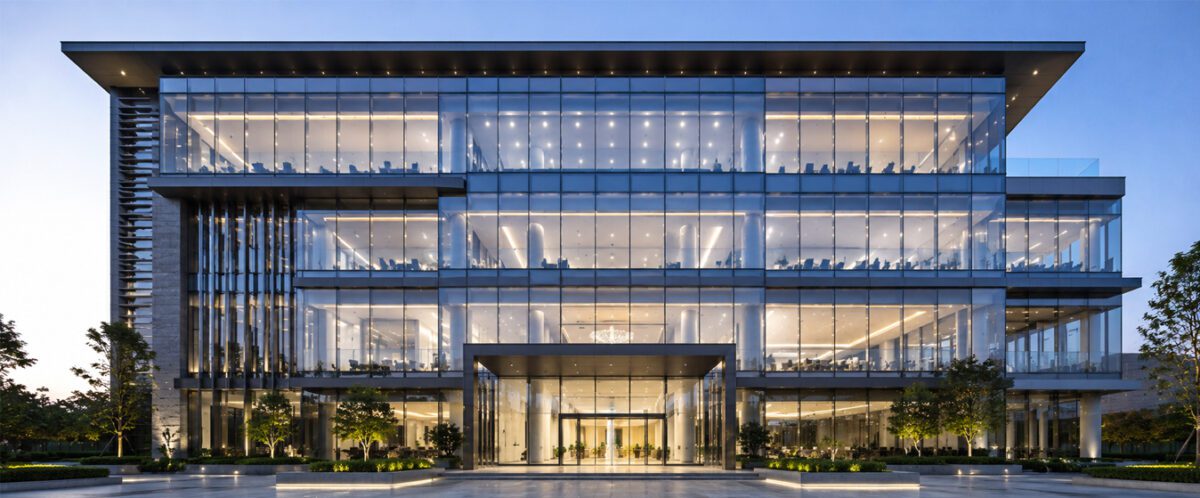
In commercial real estate, facade design is closely linked to brand perception. A clean, well-executed exterior curtain wall system gives buildings a modern, premium appearance. Seamless glass facades, sharp lines, and consistent finishes help create a strong visual identity.
For corporate offices and landmark projects, the curtain wall often becomes a symbol of innovation and professionalism.
Stick-built systems are assembled on-site using individual components such as mullions, transoms, and glass panels. This method offers flexibility in design and is suitable for low- to mid-rise commercial buildings.
While material costs may be lower initially, on-site assembly requires skilled labour and longer installation timelines. Stick-built systems are often chosen when site conditions or design complexity make prefabrication challenging.
Unitised curtain wall systems are prefabricated in factory-controlled environments and delivered to the site as complete panels. These panels are then installed floor by floor.
This approach ensures higher quality control, faster installation, and reduced on-site labour. Unitised systems are widely used in high-rise commercial buildings where speed, precision, and consistency are critical.
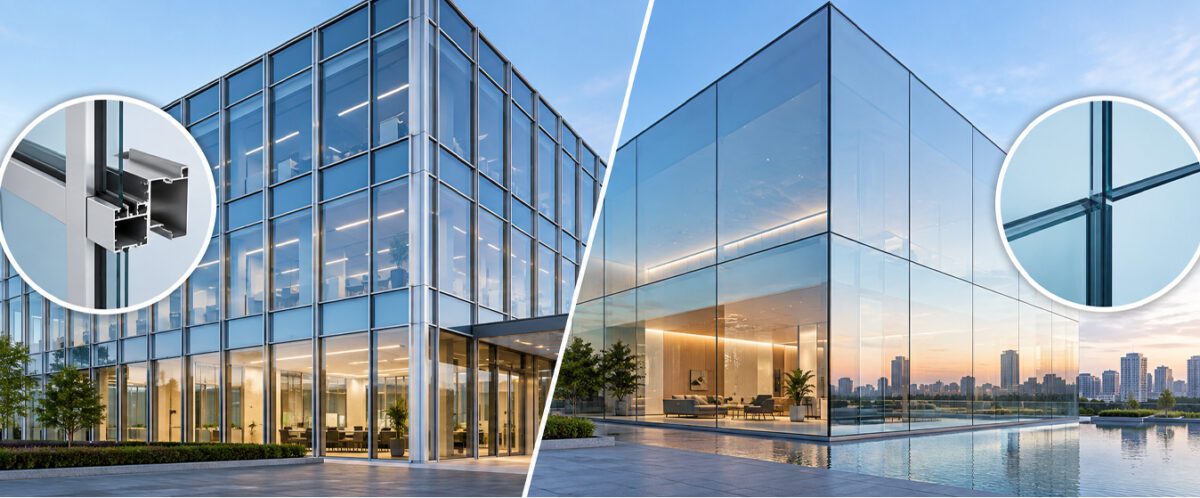
Structural glazing systems minimise visible framing to create a seamless glass façade. Silicone bonding techniques replace traditional mechanical fixings, resulting in clean and uninterrupted elevations.
These systems are commonly used in premium offices, airports, and retail facades where visual transparency and modern aesthetics are key priorities.
Glass plays a central role in most commercial curtain wall systems. It allows natural light, visual connection with the exterior, and architectural transparency.
Options such as laminated glass improve safety and acoustic performance. Reflective and tinted glass helps manage solar gain, while insulated glass units enhance thermal efficiency. The right glass specification is critical to the performance of an aluminium glass curtain wall system.
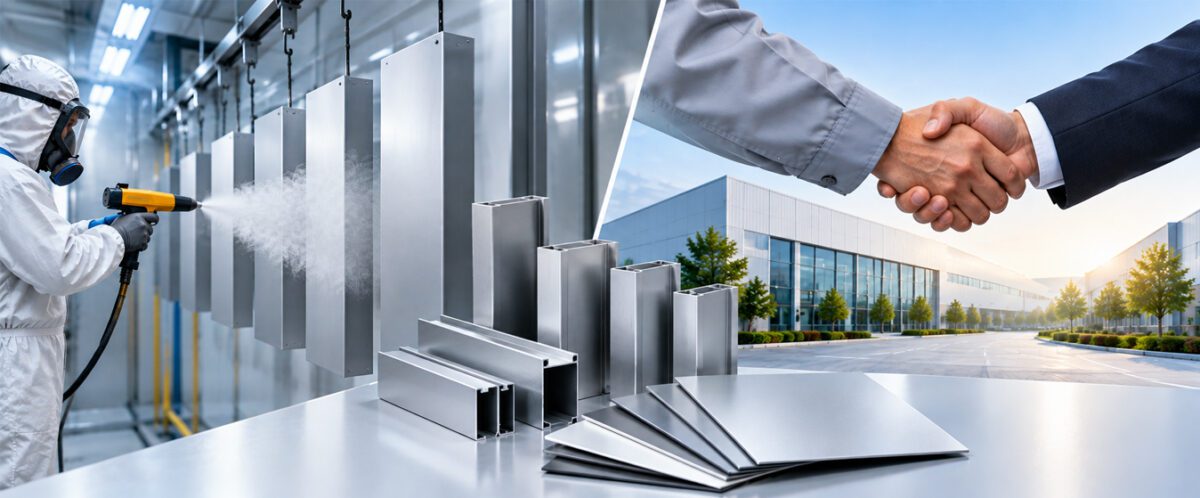
Aluminium is the most widely used framing material in curtain wall systems. Its high strength-to-weight ratio makes it ideal for tall and expansive facades.
Aluminium frames are corrosion-resistant, durable, and compatible with a wide range of finishes. Powder-coated and anodised surfaces improve longevity while offering design flexibility. In Indian climatic conditions, aluminium performs reliably with minimal maintenance.
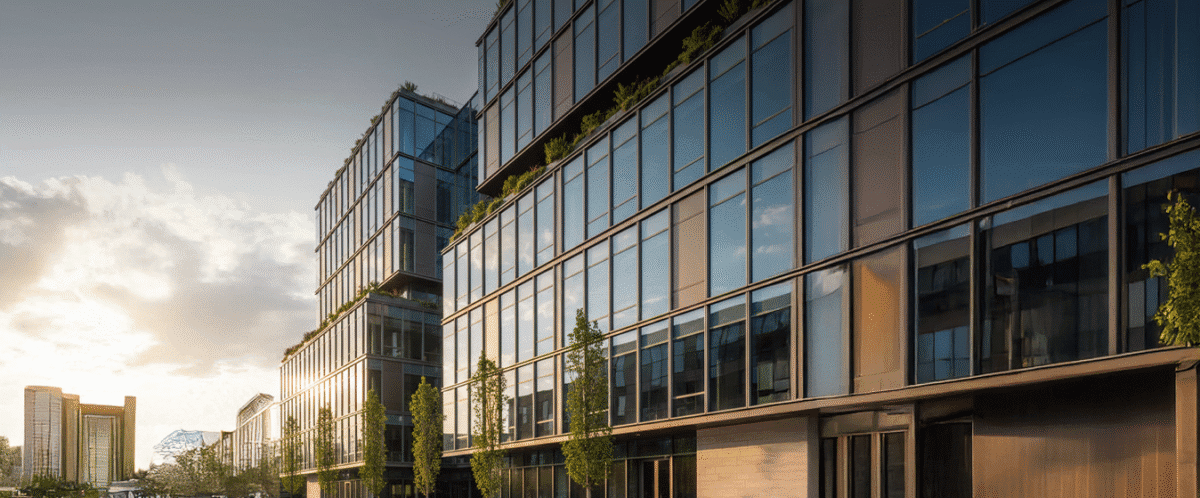
Some commercial projects incorporate metal panels, composite cladding, or hybrid systems alongside glass. These materials enhance fire resistance, weather performance, and visual variation.
Hybrid curtain wall systems allow architects to balance transparency with solid surfaces, depending on orientation, shading needs, and design intent.
A curtain wall system consists of multiple interconnected components that must function together seamlessly. These include vertical mullions, horizontal transoms, anchors, brackets, gaskets, sealants, and glazing units.
Precision in system design is essential. Curtain wall profiles must accommodate structural movement, thermal expansion, and wind pressure. Poor detailing can lead to air leakage, water ingress, or long-term performance issues.
Coordination with structural engineers, MEP consultants, and interior designers ensures that the exterior curtain wall system integrates smoothly with the overall building envelope.
Tall commercial buildings experience significant wind pressure and movement. Curtain wall systems must be designed to flex without failure while maintaining airtightness and structural integrity.
Anchoring systems allow controlled movement between the facade and the building frame, preventing stress buildup.
Fire safety is a critical aspect of commercial facade design. Proper fire-stopping between floor slabs and curtain wall systems prevents fire spread across levels.
Compliance with local building codes and fire regulations ensures occupant safety and project approvals.
Urban commercial buildings are often located in high-noise environments. Curtain wall systems with laminated glass and proper sealing significantly reduce external noise, improving interior comfort.
The performance of a curtain wall system depends heavily on installation quality. Even the best-designed systems can fail if installation is poorly executed.
Factory prefabrication improves consistency, while on-site quality checks ensure correct alignment, sealing, and anchoring. Over the building’s life cycle, curtain wall systems require relatively low maintenance compared to traditional facades.
Regular cleaning, inspections, and sealant checks help preserve performance and appearance.
Sustainability has become a core consideration in commercial construction. Curtain wall systems support green building goals by reducing energy consumption and material usage.
Aluminium and glass are recyclable materials, making them suitable for sustainable construction practices. Improved daylighting and thermal performance contribute to lower operational carbon footprints.
A well-designed aluminium glass curtain wall system aligns with modern sustainability benchmarks and green building certifications.
Modern commercial buildings demand facades that perform beyond aesthetics. A well-designed Curtain Wall System protects the structure, enhances energy efficiency, improves occupant comfort, and defines architectural identity. Whether it is a large-scale exterior curtain wall system or a high-performance aluminium glass curtain wall system, the façade has become a strategic component of commercial construction.
With growing focus on sustainability, performance, and design precision, curtain wall systems continue to shape the future of urban skylines. Leading facade manufacturers like Aparna Externa, with decades of expertise in building materials and facade engineering, deliver world-class facade solutions that combine innovation, performance, and architectural excellence to transform commercial buildings into enduring landmarks.