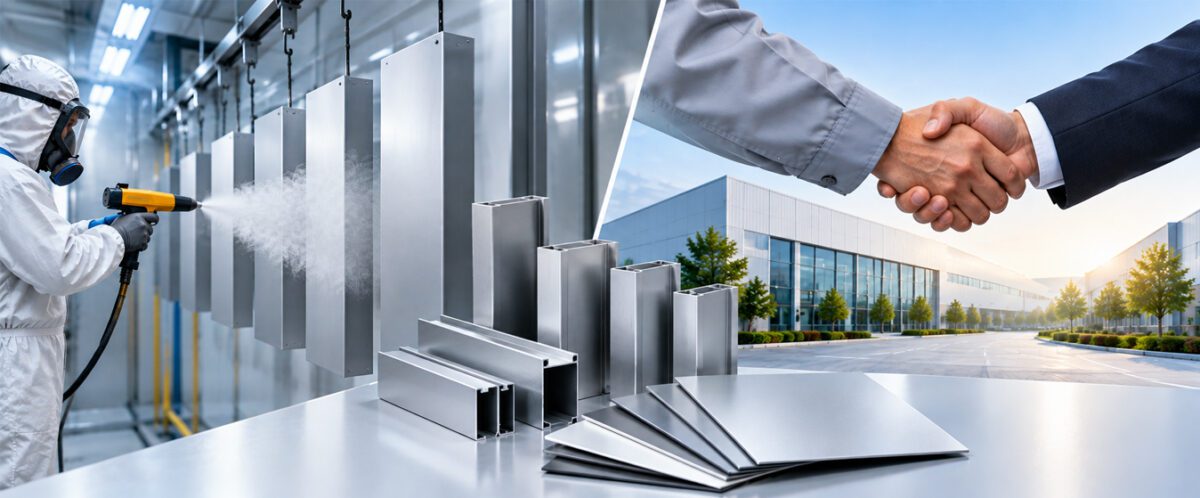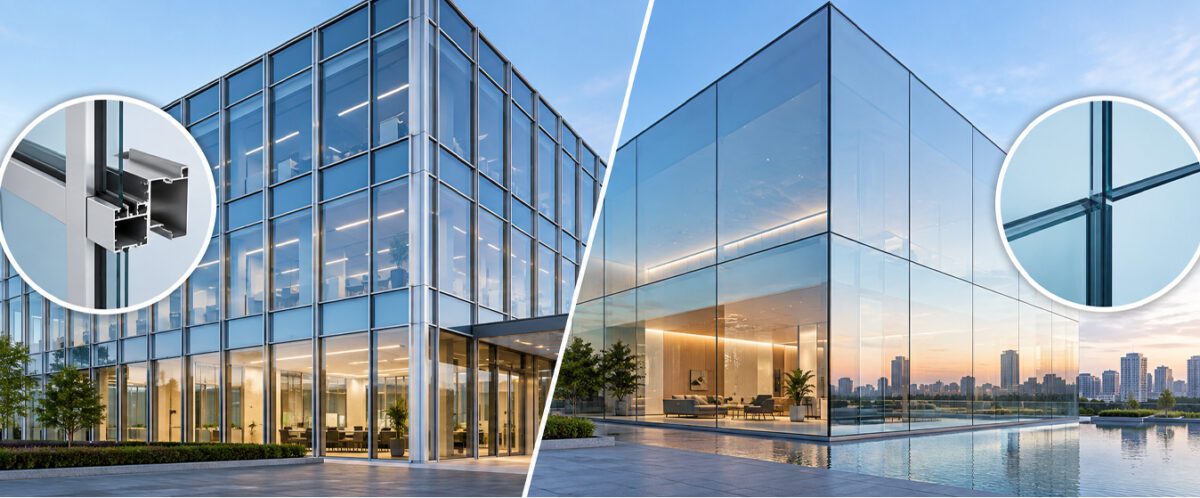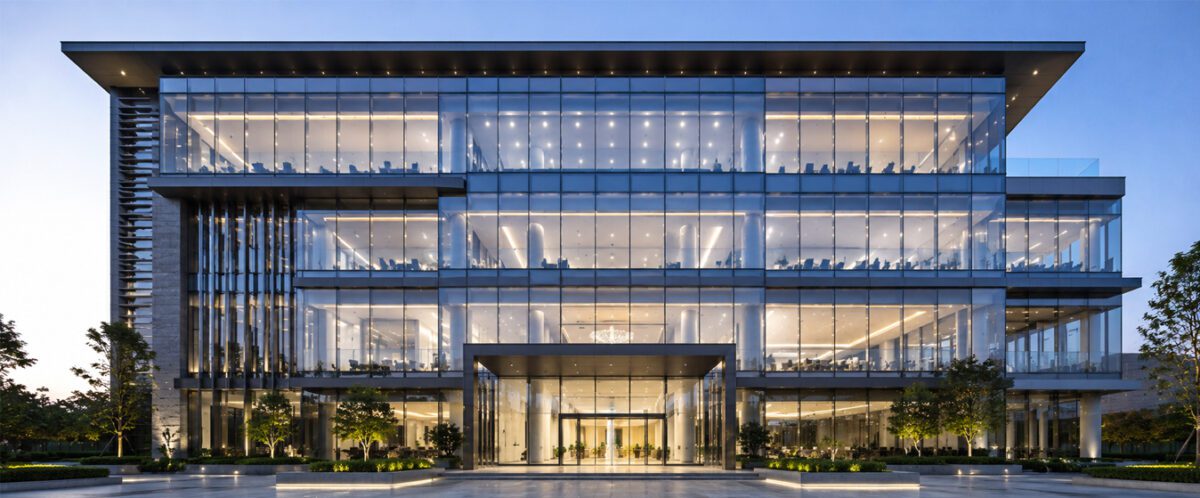

A building’s facade is the first thing people notice, and it creates the initial impression of whether a structure looks modern, premium, or ordinary.
The challenge begins when even a small measurement error enters the exterior facade design process. What appears accurate on drawings can translate into uneven panels, visible gaps, or water seepage once execution starts. This risk becomes higher in aluminium facade design, where clean lines, symmetry, and exact alignment play a major role in the final appearance.
These minor inaccuracies often lead to bigger consequences, such as increased costs, delayed timelines, and repeated on-site corrections. In some cases, the finished facade fails to match the original design vision despite significant effort and investment.
Digital modelling changes this approach by allowing architects and façade engineers to visualise the entire structure in a virtual environment before installation begins. They can test dimensions, refine details, and identify potential issues early, which reduces guesswork, improves clarity, and ensures that the executed facade stays true to the intended design.
Precision plays a defining role in how a building performs and how it is perceived. A facade functions as a protective layer against weather, pollution, and structural stress while also shaping the visual character of the building. When measurements or alignments go slightly off during the exterior facade design stage, the effects rarely remain small. A minor inconsistency can result in panel misfits, glass stress points, water leakage, or uneven finishes that become clearly visible after installation.
In modern facade design, where minimalism and sharp geometry dominate, accuracy becomes even more critical. Clean lines and symmetrical layouts leave little room for adjustment once materials are fabricated. The same applies to aluminium facade design, where lightweight yet rigid systems require exact dimensions to maintain both strength and aesthetics. Precision, therefore, is not only about visual appeal but also about durability, safety, and long-term performance.
When teams prioritise accuracy from the beginning, they reduce the likelihood of rework, avoid unnecessary material waste, and maintain smoother project timelines. Precision ultimately protects both the design intent and the project budget.
Digital modelling refers to the process of creating a detailed virtual representation of a building before actual construction begins. Instead of relying only on flat drawings, architects and facade engineers build a 3D-model that includes measurements, materials, structural data, and alignment details. This digital environment allows teams to view the facade from multiple angles and understand how every element connects with the overall structure.
Tools such as Building Information Modelling (BIM) and advanced 3D software make this possible. They enable professionals to simulate real-world conditions, test material behaviour, and predict how systems will perform once installed. In the context of modern facade design, this means designers can experiment with complex patterns, curved surfaces, or layered elevations without committing to physical prototypes.
Digital modelling also simplifies communication. Clients, consultants, and contractors can view the same model instead of interpreting separate drawings, which reduces confusion and improves collaboration. In simple terms, it acts like a rehearsal before the actual performance; teams identify and correct issues digitally rather than discovering them during construction.
Digital modelling significantly improves design accuracy by allowing professionals to visualise every detail before fabrication begins. In traditional drafting, teams often depended on multiple 2D drawings that required interpretation. Digital tools remove this ambiguity by presenting a realistic, measurable, and scalable representation of the entire exterior facade design.
Designers can zoom into minute components, check joint connections, and analyse panel placements with precision. They can quickly test alternative materials or layouts without restarting the design from scratch. This flexibility proves especially valuable in aluminium facade design, where profiles, glazing dimensions, and support structures must align perfectly to maintain both strength and appearance.
Another major advantage lies in early error detection. Digital models highlight clashes between structural elements, mechanical systems, and facade panels long before they reach the site. Identifying these conflicts at the planning stage saves time and prevents costly adjustments later. Teams also gain better control over proportions and symmetry, which is essential in modern facade design, where visual balance strongly influences architectural appeal.
Overall, digital modelling transforms design from a reactive process into a proactive one. Instead of correcting mistakes after fabrication, teams refine concepts in advance and move forward with greater confidence.
Accuracy in design only becomes meaningful when it translates smoothly into execution. Digital modelling strengthens on-site performance by providing clear installation data and eliminating guesswork for contractors. Workers receive exact positioning instructions, dimensions, and assembly sequences, which reduces dependency on manual estimations.
When teams execute aluminium facade design using digital references, they achieve better alignment and faster installation speeds. Prefabricated components fit more accurately, which reduces cutting, welding, or last-minute modifications on site. This efficiency not only saves time but also improves safety, as less adjustments mean fewer chances of structural errors.
Digital models also improve coordination among multiple stakeholders. Structural engineers, facade consultants, and site supervisors can access the same updated data, ensuring consistency throughout the project lifecycle. For large-scale modern facade design projects, this shared clarity becomes essential in managing complex elevations and multi-layered assemblies.
Virtual inspections further support execution by allowing teams to review progress without always being physically present. This approach speeds up decision-making and keeps projects aligned with original plans, even when timelines are tight.
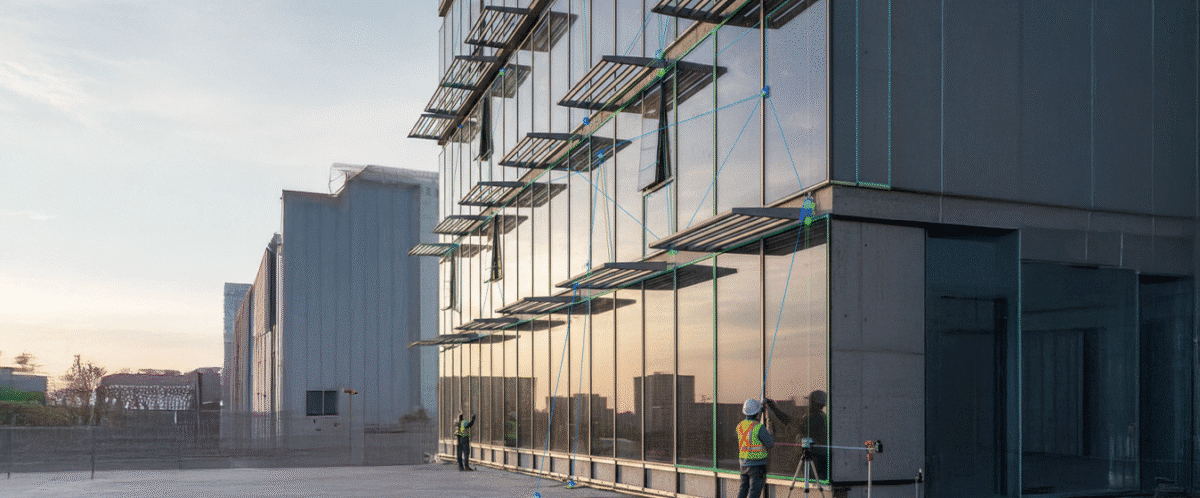
While digital modelling begins in the planning stage, technologies such as 3D scanning and digital twins extend accuracy into real-world conditions. 3D scanning captures the exact dimensions of existing structures or construction progress and converts them into precise digital data. This process proves extremely valuable during renovations or facade upgrades, where original measurements may no longer be reliable.
Digital twins take this concept a step further by creating a live, continuously updated virtual replica of the building. Teams can monitor performance, track changes, and analyse long-term behaviour of the exterior facade design without intrusive inspections. For aluminium facade design, this helps maintain structural integrity and surface performance over time.
These technologies also assist in predictive maintenance. Engineers can identify potential issues before they escalate, reducing downtime and extending the lifespan of facade systems. In modern facade design, where buildings often integrate smart systems and sustainability goals, digital twins offer a practical way to manage efficiency and performance long after construction ends.
| Aspect | Traditional | Digital Modelling |
| Visualisation | Limited 2D drawings | Interactive 3D views |
| Error Detection | Often during construction | Early design stage |
| Coordination | Manual communication | Centralised shared data |
| Site Accuracy | Depends on interpretation | Data-driven precision |
| Design Changes | Time-Consuming | Quick and flexible |
| Documentation | Static files | Dynamic and updateable |
| Long-Term Value | Limited | Supports maintenance and upgrades |
Digital modelling shifts the workflow from reactive correction to proactive planning. Instead of discovering mismatches on site, teams resolve them in a controlled virtual space. This transition leads to fewer disruptions, stronger collaboration, and more predictable project outcomes.
Beyond technical accuracy, digital modelling delivers measurable business advantages. Projects move faster because teams finalise decisions earlier and avoid repetitive revisions. Material wastage decreases as fabrication follows precise digital measurements rather than rough estimations. Budget forecasting becomes more reliable, allowing stakeholders to allocate resources with greater confidence.
Digital modelling also improves transparency. Clients can visualise the finished modern facade design before approval, which builds trust and reduces hesitation. Contractors benefit from clearer documentation, while facility managers receive accurate as-built data that supports long-term maintenance planning. In competitive architectural markets, these efficiencies often differentiate high-performing projects from average ones.
Digital modelling continues to gain momentum as buildings become more complex and sustainability expectations rise. Architects increasingly rely on digital tools to integrate energy-efficient materials, smart shading systems, and adaptive facade technologies. The demand for precision, speed, and transparency aligns naturally with data-driven design processes.
As aluminium facade design evolves, digital modelling provides the flexibility needed to explore innovative forms without compromising structural integrity. The industry gradually moves toward fully integrated digital workflows where planning, execution, and maintenance operate within a single ecosystem. This shift signals not just a technological trend but a long-term transformation in how facades are imagined and delivered.
Digital modelling has become an essential driver of precision, efficiency, and long-term value in facade engineering. From improving exterior facade design accuracy to strengthening aluminium facade design execution and enabling innovative modern facade design concepts, this approach allows architects and engineers to move forward with clarity and confidence rather than uncertainty.
Aparna Externa applies digitalised facade engineering, advanced fabrication practices, and custom exterior solutions to deliver projects that balance aesthetic impact with structural reliability. With expertise around curtain walls, glass assemblies, aluminium systems, and other facade types, our team focuses on on-time and on-budget execution supported by technology-driven processes.
Q1. Is digital modelling only useful for large buildings?
Small and mid-scale projects also benefit from early visualisation and measurement accuracy. Even residential or commercial facades gain efficiency through digital planning.
Q2. Does digital modelling replace architects or engineers?
Digital tools support professionals rather than replace them. They enhance creativity and decision-making by providing clearer data and visualisation.
Q3. Is digital modelling expensive to implement?
Initial investment may appear higher, but reduced rework, faster approvals, and material savings usually offset the cost over time.
Q4. Can teams update digital models during construction?
Most platforms allow real-time updates that reflect on-site changes, ensuring the final output remains aligned with the design intent.
Q5. How does digital modelling help with building maintenance?
It provides accurate documentation and performance data, which simplifies repairs, upgrades, and long-term facility management.