
How do you design one building that has homes, offices, shops, and hotels, all under one roof?
Mixed-use developments bring different activities into a single structure. Each space has its own needs. Homes require comfort and privacy. Offices depend on controlled daylight and energy efficiency. Retail areas need openness and visibility.
One thing that connects all these spaces and is essential in how the building functions every day is the building’s facade.
When the facade does not respond to these differences, problems appear over time. Heat gain increases, noise control becomes uneven, and maintenance becomes more demanding. The building may also start to look visually disconnected, especially when different zones are treated separately.
Aluminium facade systems help solve this challenge. They are strong, lightweight, and flexible enough to meet different performance needs while maintaining a consistent exterior. This blog will help you understand the key considerations when choosing aluminium facade systems for mixed-use developments and why the right facade decision matters in the long run.
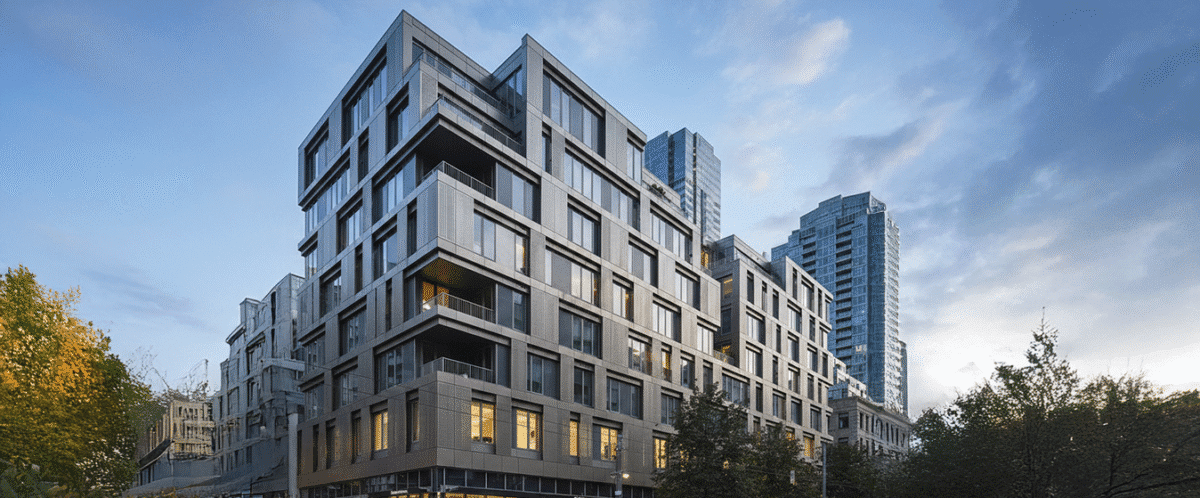
In modern times, facade systems act as non-structural envelopes that manage environmental forces while supporting architectural intent. In mixed-use developments, this responsibility becomes more advanced because each zone of the building operates differently.
Retail floors demand openness and transparency to attract footfall, office spaces require balanced daylight and thermal control, residential units prioritise acoustic comfort and privacy, while hospitality zones emphasise uninterrupted visual appeal and brand identity. A single facade must therefore adapt to multiple performance expectations without compromising cohesion.
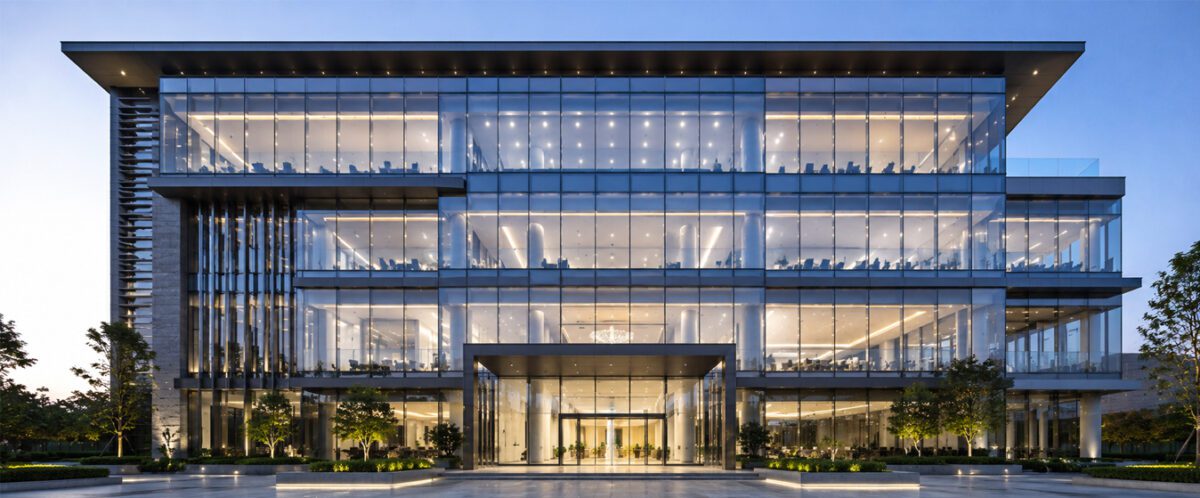
Aluminium glass facade systems enable this adaptability by offering modular configurations and varied glazing combinations that can be designed for each functional zone while maintaining a unified external language. Early integration of facade planning with structural and MEP design is critical in such projects. When facade engineering begins during the conceptual stage rather than post-design, architects gain greater flexibility in controlling energy loads, ventilation strategies, and spatial transitions. The facade evolves into a responsive interface rather than a static shell, capable of balancing environmental control with architectural expression across the building’s vertical and horizontal planes.
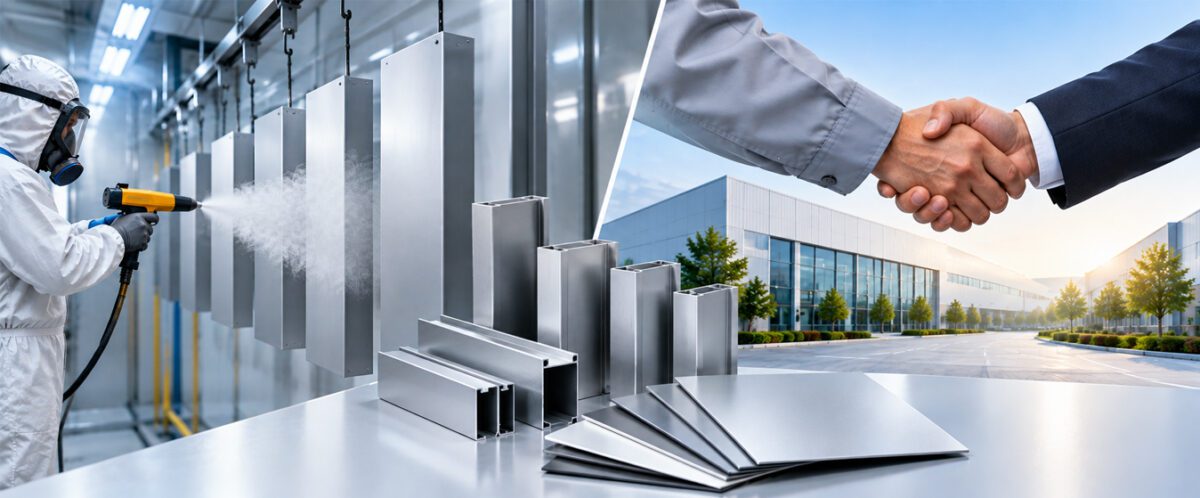
Material choice is foundational in facade engineering because it determines durability, maintenance frequency, and adaptability to design variations. Aluminium stands out as the dominant material for modern facade systems due to its exceptional strength-to-weight ratio, corrosion resistance, and fabrication flexibility.
Unlike heavier materials that impose structural load limitations, aluminium profiles allow expansive glazed surfaces supported by slender frames, which helps architects to achieve modern minimalist aesthetics without compromising structural integrity.
Another advantage lies in aluminium’s natural resistance to environmental degradation. Mixed-use developments often operate continuously, which makes facade maintenance disruptive and costly. Aluminium requires comparatively low maintenance, retains finish quality over extended periods, and performs consistently across diverse climatic conditions, including coastal and urban pollution-heavy environments.
Its malleability further allows curved facades, angular transitions, and large-span glazing, making it equally suitable for podium retail sections and high-rise towers. For developments that seek long-term visual and functional reliability, aluminium facade systems provide a dependable balance of endurance and design freedom.
Stick-built facade systems are assembled component by component on the construction site using vertical mullions and horizontal transoms. This method offers high design flexibility and is particularly useful in podiums, retail storefronts, and architecturally irregular zones where customisation is necessary. Transportation logistics are simpler because the components are smaller and easier to handle. On-site adjustments can also be made to address alignment variations or structural discrepancies.
However, stick-built facade systems are labour-intensive and require skilled installers to ensure proper sealing and alignment. Installation timelines tend to be longer, and performance consistency depends heavily on workmanship. While they are cost-effective for low-rise or bespoke sections, their practicality diminishes in tall structures where speed and uniform quality become critical.
Unitised aluminium facade systems are pre-fabricated modules manufactured in controlled factory environments. Entire panels, often spanning floor-to-floor heights, are glazed, sealed, and tested before being transported to the site for rapid installation. This method significantly reduces on-site labour, improves quality control, and accelerates construction schedules. In mixed-use developments with high-rise residential or office towers, unitised aluminium glass facade systems ensure uniform performance and safer installation processes.
The primary considerations involve higher upfront logistics costs and the need for repetitive module dimensions. Despite this, the long-term benefits of speed, precision, and reduced error margins make unitised systems the preferred choice for large-scale projects.
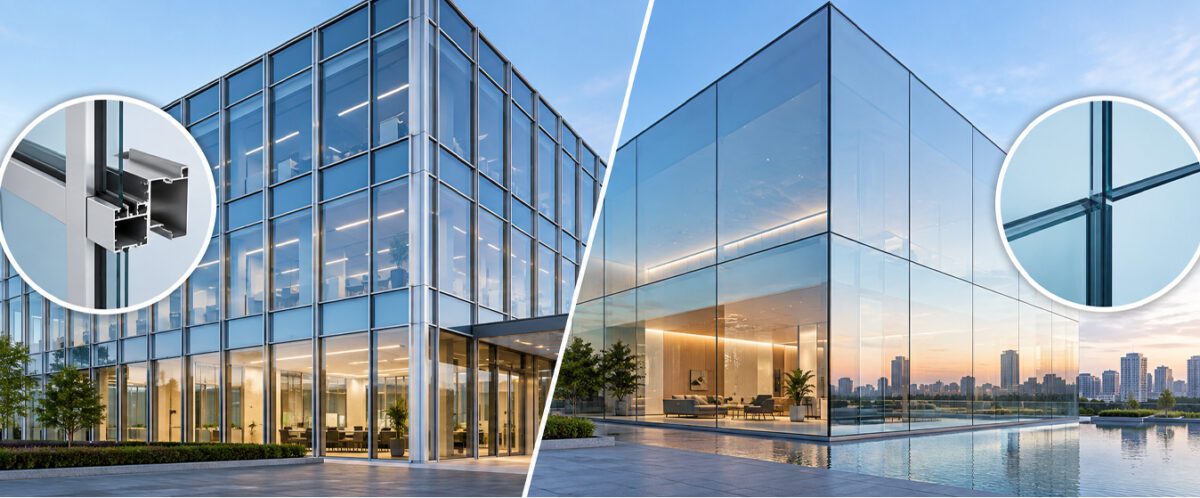
Structural glazing techniques eliminate visible mechanical fasteners by bonding glass panels directly to aluminium sub-frames using high-strength silicone. The result is a smooth, uninterrupted glass facade that maximises visual continuity. Semi-structural glazing introduces subtle aluminium caps along one axis to balance aesthetics with cost efficiency. These aluminium glass facade systems are widely used in atriums, hospitality entrances, and commercial lobbies where visual impact is paramount.
Thermal efficiency is central to facade performance in mixed-use developments where HVAC demands vary across zones.
Aluminium profiles incorporate thermal break technology using low-conductivity materials to interrupt heat transfer. Combined with double or triple glazing and insulated spandrel panels, these systems significantly reduce energy loss.
Efficient aluminium facade systems contribute to lower operational costs and support green building certifications by stabilising indoor temperatures and reducing mechanical cooling loads.
Wind loads, air permeability, and water tightness determine the envelope’s ability to withstand environmental forces.
Mixed-use buildings, especially high-rise structures, must endure fluctuating pressures and seasonal weather extremes.
Advanced facade systems undergo rigorous testing to ensure joints, seals, and anchoring systems maintain long-term integrity. Consistent performance prevents leakage, corrosion, and structural fatigue, which protects both interiors and structural frameworks.
Fire safety is a critical consideration in buildings accommodating diverse occupancy types. Fire-rated curtain wall assemblies integrate specialised glass, intumescent materials, and floor-line barriers to restrict flame and smoke spread.
Compliance with fire regulations ensures safe evacuation pathways and limits structural damage, making fire-resistant aluminium facade systems essential in multi-storey mixed developments.
Noise insulation is equally significant in urban mixed-use settings where residential units may coexist above retail or office floors.
Laminated glazing, varied air gaps, and acoustic seals reduce sound transmission, improving indoor comfort.
Effective acoustic performance ensures each functional zone operates without disturbance, enhancing user experience and property value.
Beyond performance, façade systems define a building’s visual character. Aluminium enables slim profiles, diverse colour finishes, and textured coatings that align with both contemporary and classical design narratives. Architects can integrate louvers, shading devices, and decorative panels without structural compromise.
In mixed-use developments, this adaptability ensures that commercial branding, residential elegance, and hospitality sophistication can coexist within a cohesive architectural language. Aluminium glass facade systems provide the clarity and refinement required for skyline prominence while allowing creative expression across elevations.
Buildings naturally experience thermal expansion, contraction, and structural sway due to wind or seismic activity. Facade systems must accommodate these movements through expansion joints, flexible anchors, and precise alignment tolerances.
Digital facade engineering and advanced fabrication techniques improve dimensional accuracy, ensuring panels fit seamlessly while allowing controlled movement. Modularity not only enhances installation efficiency but also simplifies future replacements or upgrades without disrupting adjacent sections.
The choice between on-site assembly and factory prefabrication influences project timelines and operational planning. Mixed-use developments often function on tight schedules where phased occupancy is common.
Unitised facade systems support rapid installation and minimise site congestion, whereas stick-built systems allow adaptability in irregular zones. Aluminium’s low maintenance requirements further reduce lifecycle expenses.
Routine cleaning and periodic inspections are typically sufficient to preserve appearance and performance for decades, ensuring long-term return on investment.
Performance claims gain credibility when validated through independent certifications.
International standards such as ASTM, AAMA, and EN regulations define test methods for air leakage, structural strength, water penetration, and wind resistance.
Compliance with these benchmarks assures developers, investors, and occupants that the facade meets rigorous safety and durability criteria. Certified aluminium facade systems provide confidence in both regulatory adherence and operational reliability, particularly in high-value mixed-use projects where risk mitigation is essential.
In mixed-use developments where functionality, aesthetics, and sustainability intersect, aluminium facade systems represent a strategic investment rather than a mere architectural feature. Their adaptability to varied occupancy needs, resilience against environmental pressures, and compatibility with advanced glazing technologies make them integral to urban building exteriors. Thoughtful selection and precise execution ensure that facade systems not only enhance visual appeal but also strengthen long-term performance and operational efficiency.
Aparna Externa brings digital facade engineering expertise, precision manufacturing, and customised aluminium and glass solutions to address the evolving demands of modern architecture. With decades of experience in building materials and exterior innovation, we focus on delivering premium facade solutions that offer structural integrity with aesthetic excellence across diverse project scales.