
The skyline is changing, and it’s changing fast.
Across Indian cities, towers are rising taller, sleeker, and more expressive than ever before. But behind every striking glass exterior lies a deeper story. Many high-rise buildings still struggle with excessive heat gain, high energy bills, facade maintenance issues, and structural inefficiencies caused by outdated exterior materials. As buildings climb higher, these problems multiply.
Developers face mounting pressure. Energy regulations are tightening. Occupants demand comfort. Urban land is shrinking. Traditional masonry and heavy cladding systems were never designed for this vertical reality.
This is where aluminium glass facade systems come into the equation, not as decorative upgrades, but as engineered solutions built for modern high-rise construction. They respond to climate, manage structural loads, and deliver performance that matches architectural ambition. In India’s vertical growth story, facade systems are no longer secondary elements. They are strategic design decisions.
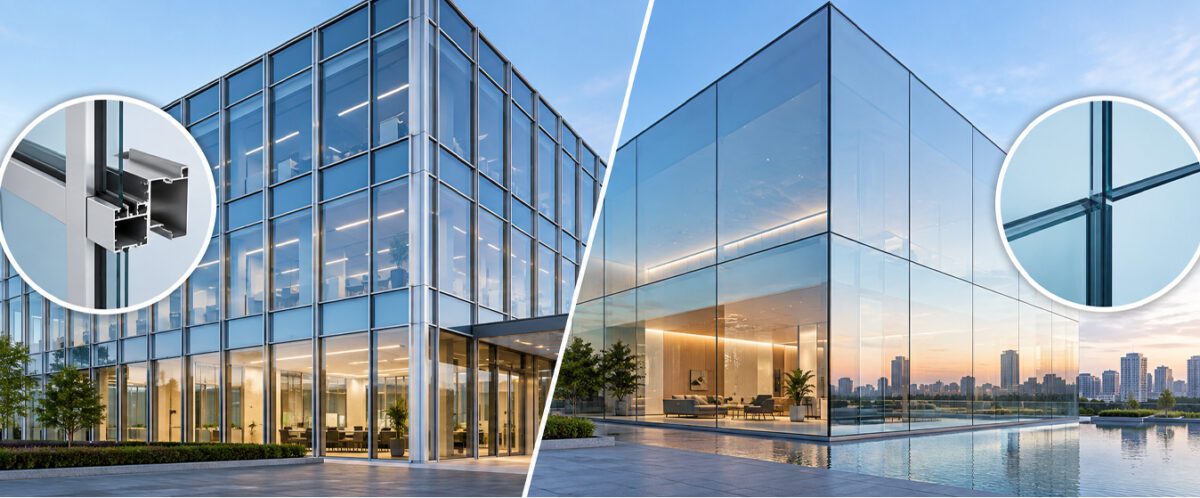
Aluminium glass facade systems are engineered exterior envelopes that combine aluminium structural framing with high-performance glazing. These systems are non-load-bearing skins designed to protect the building while enhancing efficiency.
At their core, they include:
The aluminium framework acts as the structural skeleton. It supports glass panels, distributes wind loads, and anchors securely to the building’s primary structure. The glazing regulates light, heat, and sound.
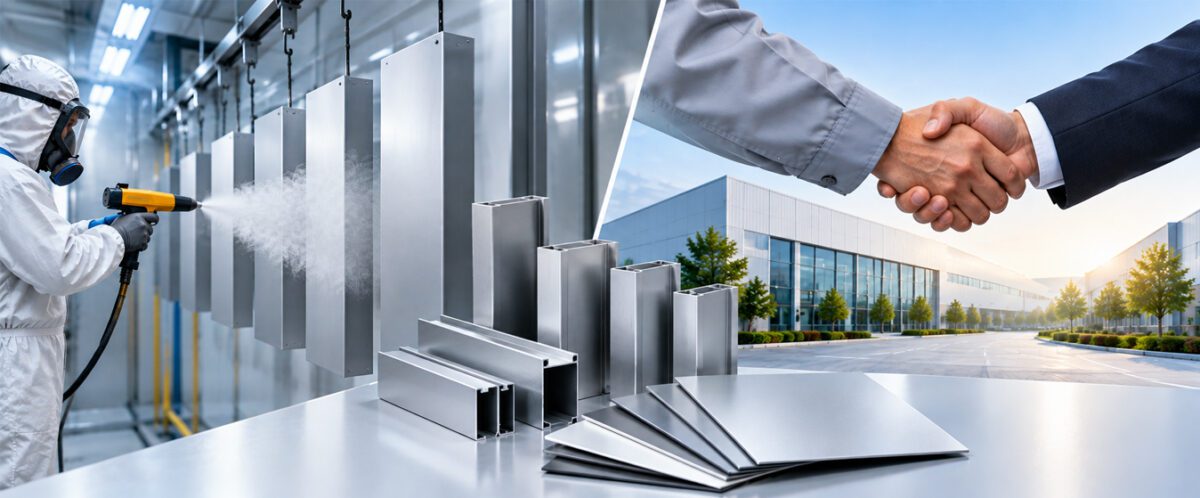
What makes aluminium facade systems different is precision. These are not site-built walls assembled piece by piece. Many are factory-fabricated under controlled conditions and installed systematically on-site. The result is consistency, durability, and performance tailored for tall buildings.
Cities like Mumbai, Bangalore, and Gurgaon are expanding vertically because horizontal growth is no longer viable. High-rise construction solves land constraints, but it introduces new engineering demands.
Tall buildings face stronger wind pressures. They absorb intense solar radiation. Coastal cities deal with humidity and corrosion. Urban centers struggle with pollution and noise. Traditional exterior systems, especially heavy masonry facades, add structural load and require frequent maintenance.
Modern facade systems respond to these realities. Aluminium glass facade systems are lighter, more adaptable, and engineered to perform under high wind conditions. They also support green building certifications such as LEED and GRIHA by improving energy performance and daylight penetration.
For high-rise construction in India, advanced facade systems are not aesthetic indulgences. They are performance necessities.
When evaluating aluminium glass facade systems, the advantages are both structural and operational.
Aluminium has an exceptional strength-to-weight ratio. In tall buildings, reducing dead load directly improves structural efficiency and foundation design. Lighter facades mean optimized structural frameworks.
High-rise towers experience significant wind forces. Engineered aluminium facade systems are designed with reinforced mullions and precision anchoring to handle these loads safely.
With double-glazed units and Low-E coatings, aluminium glass facade systems reduce solar heat gain while allowing natural daylight. This lowers HVAC dependency and enhances occupant comfort.
Unitised systems are prefabricated in factories and installed panel by panel. This speeds up project timelines and ensures quality control.
Aluminium resists corrosion and weathering. Compared to plastered or painted exteriors, maintenance demands are significantly lower over the building’s lifecycle.
Whether curved facades, vertical fins, or seamless glass skins, aluminium facade systems enable expressive, modern forms without compromising performance.
When developers assess facade systems for high-rise projects, lifecycle performance becomes critical.
|
Parameter |
Aluminium Glass Facade Systems |
Conventional Masonry / Cladding |
|
Structural Weight |
Lightweight and reduces structural load |
Heavy and increases foundation demand |
|
Wind Resistance |
Engineered for high-rise wind loads |
Limited adaptability |
|
Energy Efficiency |
High with DGU & Low-E glass |
Moderate to low |
|
Installation Speed |
Faster via prefabrication |
Slower, labor-intensive |
|
Natural Daylighting |
Maximised |
Limited |
|
Maintenance |
Low |
Frequent repairs |
|
Design Flexibility |
Modular and adaptable |
Limited customisation |
|
Lifecycle cost |
Higher upfront, optimised long-term ROI |
Lower upfront, higher long-term costs |
This comparison makes one thing clear: aluminium facade systems are built for vertical architecture.
Glazing technology defines how well a facade performs.
Double-glazed units trap air or inert gas between layers to improve insulation. Low-E coatings reflect infrared heat while allowing visible light to pass through. Solar-control glass reduces glare and excessive heat gain.
In busy urban corridors, laminated and tempered glass enhances safety and acoustic performance. These components transform aluminium glass facade systems into climate regulators rather than mere exterior skins.
The result is balanced daylight, thermal comfort, and reduced operational energy costs.
The evolution of facade systems in India is gaining momentum.
Double skin facades create a ventilated cavity between two layers of glazing. This cavity acts as a thermal buffer, reducing heat gain in hot climates.
Hybrid systems combine glass with aluminium composite panels or stone elements. This approach balances performance, cost, and design expression.
Kinetic facades, which are still limited in India, represent the next step, allowing building skins to respond dynamically to environmental conditions.
Each advancement pushes aluminium facade systems closer to intelligent architectural envelopes.
High-rise facade engineering is complex. Wind loads increase exponentially with height. Anchoring systems must transfer loads safely to the structural core. Fire-rated glazing and compartmentation strategies enhance safety compliance.
Digital tools such as Building Information Modeling improve coordination between architects and facade engineers, while factory fabrication enhances precision, and skilled installation ensures long-term durability.
Without technical expertise, even the most advanced facade systems can fail. Execution matters as much as design.
The demand for aluminium glass facade systems is expanding beyond corporate towers. Residential high-rises, hospitals, and educational institutions are adopting engineered facade systems for durability and performance.
Government-backed urban initiatives and sustainability mandates are accelerating this shift. Developers increasingly recognise that aluminium facade systems offer long-term value rather than short-term cost savings.
India’s skyline is evolving into a landscape of performance-driven architecture.
High-rise construction in India demands more than visual appeal. It demands envelopes that can handle climate, wind, safety, and energy performance simultaneously.
Aluminium glass facade systems answer this demand with lightweight strength, durability, and architectural flexibility. They are not trends. They are structural and environmental solutions for vertical growth.
Aparna Externa is known to offer digitalised facade engineering, curtain wall systems, aluminium systems, and glass assemblies to deliver world-class facade systems across India.
As India builds higher, smarter, and more responsibly, aluminium facade systems will continue to shape skylines that are not only impressive to look at, but engineered to perform.
Q1. Why do builders choose aluminium glass facade systems for tall buildings?
Builders choose aluminium glass facade systems because they make buildings strong without adding too much weight. These systems can handle strong winds at higher floors and help control heat and sunlight. They also give the building a modern and stylish glass appearance.
Q2. How do aluminium glass facade systems help save electricity?
Aluminium glass facade systems use special glass that reduces heat from direct sunlight while allowing natural light to enter. This keeps indoor spaces cooler and reduces the load on air conditioning systems, which helps lower electricity usage.
Q3. Do aluminium glass facade systems require heavy maintenance?
Aluminium glass facade systems require minimal maintenance. Aluminium resists rust and corrosion, and the glass panels can withstand different weather conditions. Compared to traditional painted or plastered exteriors, these systems need fewer repairs and less frequent upkeep.