Why is it that there are aluminium facades that last year after year, and others that start to fade, to be damaged or even corroded much earlier?
The difference is usually dependent on the coating.
Bad finishes can lead to less attractive surfaces, higher maintenance requirements, and a shorter useful life for the building’s exterior surfaces. By providing a protective coating that can withstand the elements, wear, and environmental hazards, powder coating helps address these challenges and ensures that the product remains aesthetically pleasing over time.
That’s why powder coating is a popular choice for facades, curtain walls, windows, doors and other architectural systems. It is important to understand how the powder coating process works, the types of coating options available, and the factors that can affect coating durability before comparing powder coating services.
This guide contains only the basics.
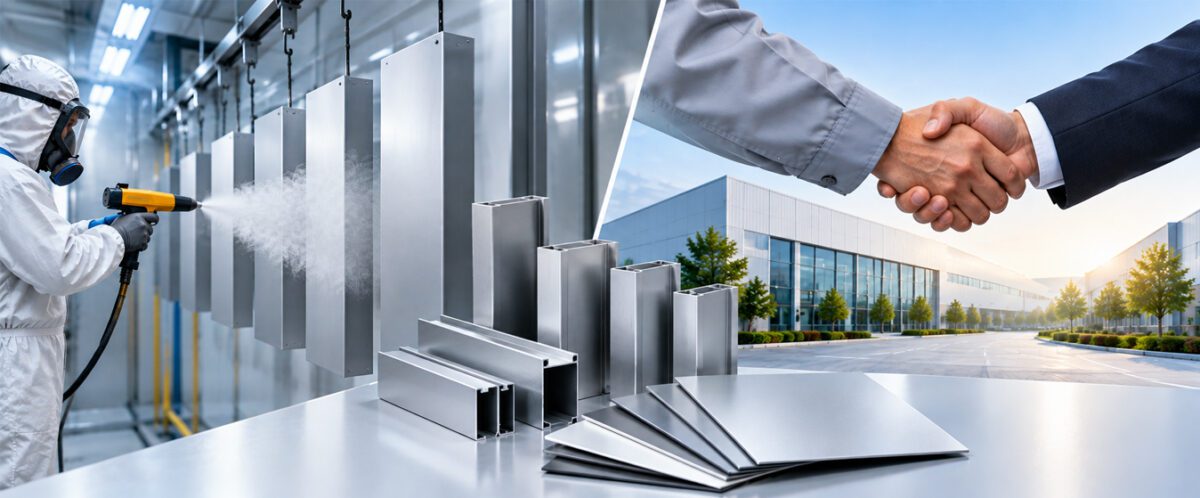
Powder coating, a dry finishing technique, is employed for imparting protection and aesthetics to metal parts. The principle behind powder coating is very different from the conventional liquid paint, which is applied with solvents, as it is based on a fine powder that is applied by an electrostatic charge and then cured under heat.
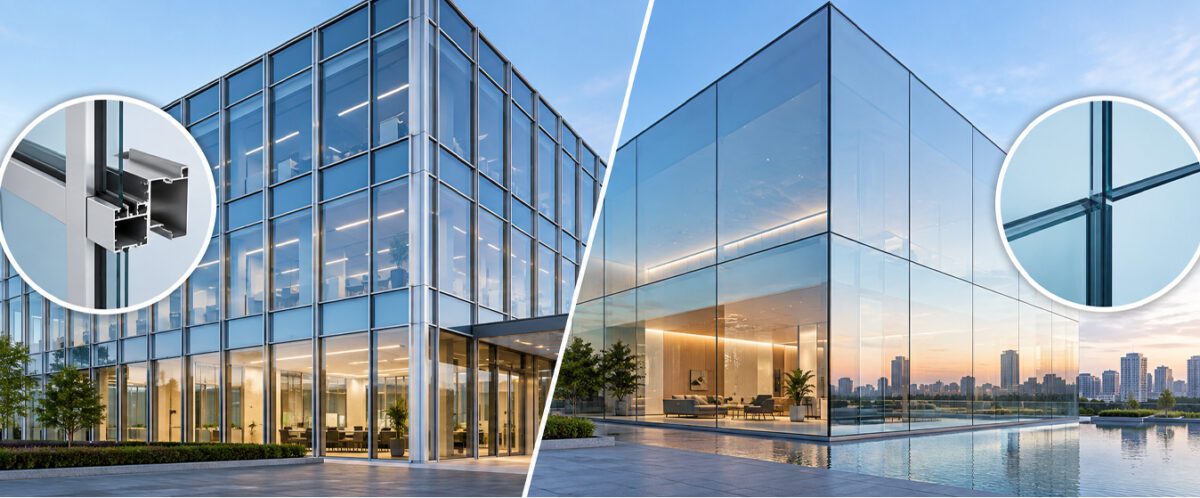
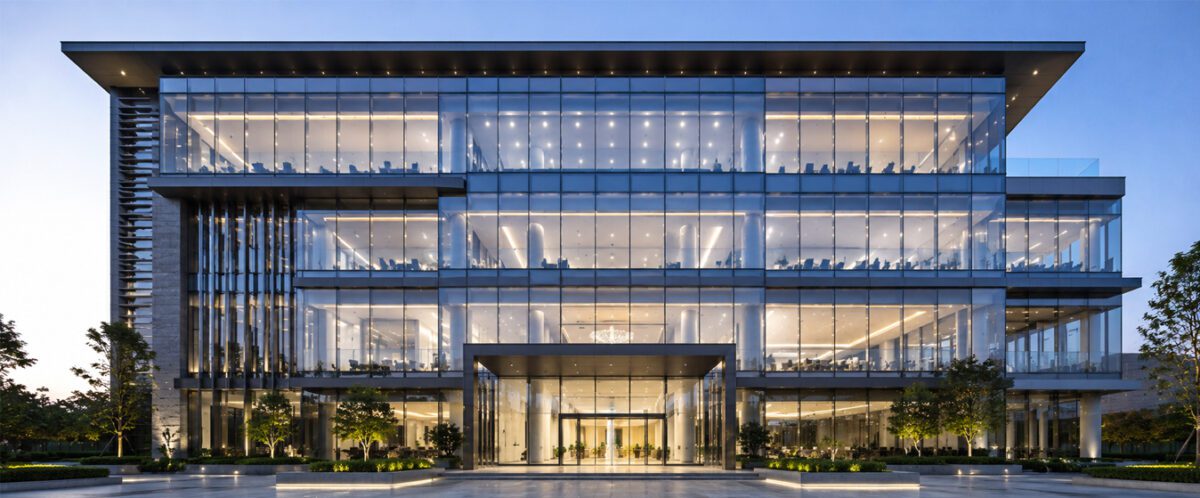
This process is heavily relied upon by architectural aluminium systems. Finishes that can be exposed to the elements continuously and not diminish their appearance are required for facades, curtain walls, doors, windows, pergolas, louvers, and railings.
The powder coating process is divided into 3 stages.
Any dust, grease, dirt, oxidation and other contaminants need to be removed prior to the coating process. Residues that remain may have an impact on adhesion and coating performance.
The aluminium systems are normally subjected to pre-treatment processes to enhance the bonding and corrosion resistance.
Strong preparation creates the foundation for a finish that lasts.
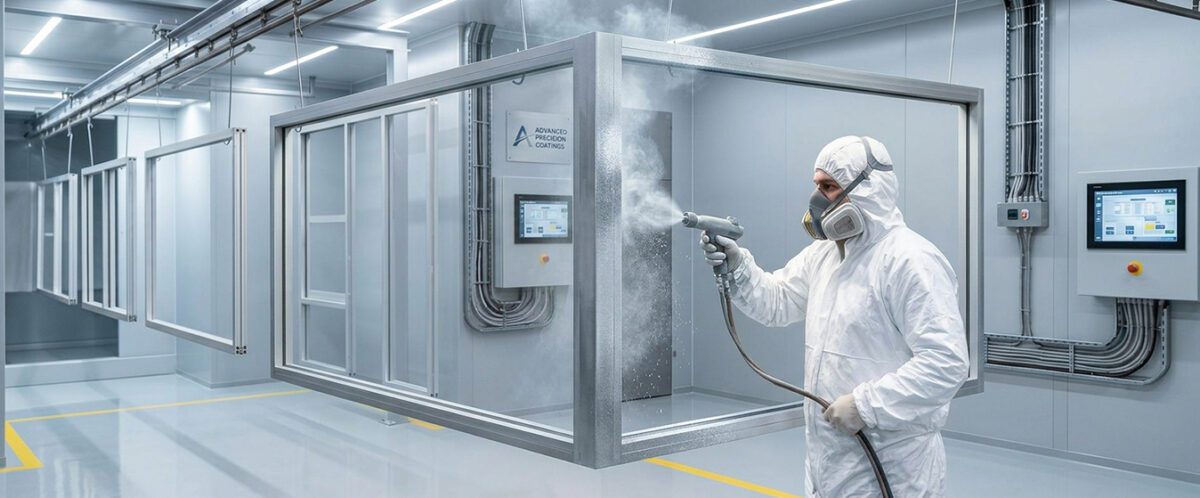
When the surface is prepared, it is sprayed with special equipment that atomizes the powder into electrically charged particles, which are then applied to the grounded metal part.
The charged particles adhere to the surface and create a uniform layer over the workpiece. There is consistent coverage on flat areas, edges and corners, which can be challenging with traditional paint systems.
The coated part is then placed in a curing oven.
The powder melts, flows and fuses to form a continuous protection layer when exposed to heat. The cured finish is extremely resistant to chipping, scratching, and weathering and to wear in general.
That’s why the powder coating solutions have become standard across architectural and industrial applications.
The exterior materials surrounding buildings are constantly exposed to heat, rain, pollution, dust, moisture, and UV radiation, all of which have an impact on the performance of exterior materials over time.
The powder coating provides protection to aluminium systems against these conditions and does not require too much maintenance work.
Aluminium naturally resists corrosion, but exterior environments can still affect its appearance and performance over the years.
A properly applied powder coating acts as an additional protective barrier. Moisture finds it harder to reach the substrate, while scratches and minor impacts are less likely to damage the surface.
Projects located near coastal regions, industrial zones, or areas with high humidity often benefit significantly from this added protection.
Many surface finishes can be degraded over the years by strong sunlight. Polyester powder coating systems will provide good resistance to UV. Colors will last longer, which minimizes fading and chalking.
That’s why powder coating is particularly beneficial for facades, window systems and other elements of the exterior of buildings that are expected to look great for many years.
Powder coatings are available in a wide range of colours, textures, and gloss levels, allowing designers to align finishes with project requirements. Matte surfaces, metallic effects, textured finishes, and custom shades can all be achieved without compromising performance.
Consistency across multiple components becomes easier to maintain, particularly in large-scale developments.
Building owners generally prefer solutions that reduce upkeep.
Powder-coated surfaces require minimal maintenance compared to many conventional finishes. Cleaning is straightforward, and the coating remains less prone to peeling, cracking, or flaking.
Lower maintenance demands can translate into reduced lifecycle costs over time.
Environmental considerations now influence many construction decisions.
Powder coatings contain little to no volatile organic compounds (VOCs), unlike several solvent-based paint systems. Material utilisation rates are also significantly higher because excess powder can often be recovered and reused during application.
Those characteristics make powder coating a more environmentally responsible finishing option for modern projects.
Environmental exposure, project location, maintenance expectations, design requirements, and performance targets all influence the selection process.
Experienced powder coating companies evaluate these factors before recommending a suitable coating system.
Below are the few most used ones:
Polyester coatings are widely used across architectural applications.
Excellent weather resistance and strong UV performance make them suitable for exterior aluminium systems. Facades, curtain walls, windows, doors, and railings commonly use polyester-based coatings because they maintain colour and finish quality even after prolonged outdoor exposure.
Epoxy coatings offer impressive chemical resistance and adhesion properties.
Industrial equipment, interior metal components, and applications requiring high corrosion resistance often benefit from epoxy formulations. Direct sunlight, however, can affect their long-term appearance, which limits their suitability for external architectural use.
Hybrid coatings combine the characteristics of polyester and epoxy systems.
They deliver a balance of durability, appearance, and cost-effectiveness, making them useful for interior architectural applications, office fit-outs, partitions, and furniture.
Many powder coating manufacturers recommend hybrid powder coatings for architectural projects where long-term exterior durability is a priority.
Both finishing methods serve a purpose. Performance requirements, substrate type, and project goals usually determine which option is most appropriate.
The comparison below highlights some key differences.
| Feature | Powder Coating | Traditional Liquid Paint |
| Application Method | Electrostatic dry powder application | Liquid paint sprayed or brushed |
| Solvent Content | Solvent-free | Contains solvent |
| Coating Thickness | Uniform and generally thicker | Often thinner and may require multiple coats |
| Durability | High resistance to scratches and impact | More vulnerable to wear & damage |
| Corrosion Protection | Excellent with proper application | Depends on the paint system and maintenance |
| Weather Resistance | Strong outdoor performance | Can deteriorate faster under exposure |
| Material Utilisation | Minimal Waste | Greater overspray and material loss |
| Maintenance | Lower maintenance requirements | More frequent touch-ups may be needed |
| Lifecycle Cost | Lower over the long run | Maintenance costs can increase over time |
A provider’s processes, equipment, expertise, and quality controls can directly influence the final result.
Review the checklist below before finalising the provider:
Coating architectural aluminium requires specialised knowledge.
Service providers with experience across facades, curtain walls, windows, and doors often understand the performance expectations associated with these applications.
Strong coating performance begins long before powder reaches the surface.
Proper cleaning and pre-treatment facilities help ensure reliable adhesion and corrosion resistance.
Consistent inspection procedures reduce the likelihood of defects such as uneven coverage, colour variation, or curing issues.
Quality assurance should form part of every stage of the process.
Modern architecture demands flexibility.
The ability to offer a broad selection of colours, textures, and finish options allows designers and developers to achieve project-specific design goals without compromising performance.
Architectural applications often involve tighter specifications and higher expectations than standard industrial projects.
Providers familiar with these requirements are better equipped to deliver consistent results.
The perfect powder coating finish is not only a matter of selecting the correct colour. The effectiveness and durability of the coating depend on the type of coating, the surface preparation and the quality of the application.
Want a finish that will maintain your aluminium systems in an attractive and functional condition for many years?
Aparna Externa is a provider of superior quality powder coat finishes for architectural systems like curtain walls, facades, aluminium window and door systems and more. The company’s focus on quality and advanced manufacturing processes ensure long-lasting, consistent finishes that keep modern buildings looking and functioning their best.
Q1. Why do builders and architects choose powder coating for aluminium systems?
Powder coating helps aluminium windows, doors, facades, and railings stay protected from the sun, rain, moisture, and daily wear. It creates a strong finish that lasts longer, needs less maintenance, and keeps the surface looking fresh for years.
Q2. Does powder coating help reduce maintenance?
Yes, powder-coated surfaces resist fading, chipping, peeling, and corrosion better than many traditional finishes. A simple cleaning routine is usually enough to maintain their appearance, which helps reduce maintenance efforts and costs over time.
Q3. How do I choose the right powder coating service provider?
Look for a provider with experience in architectural aluminium systems, proper surface preparation processes, and strict quality checks. A reliable powder coating company will recommend the right coating for your project and ensure a consistent, long-lasting finish.