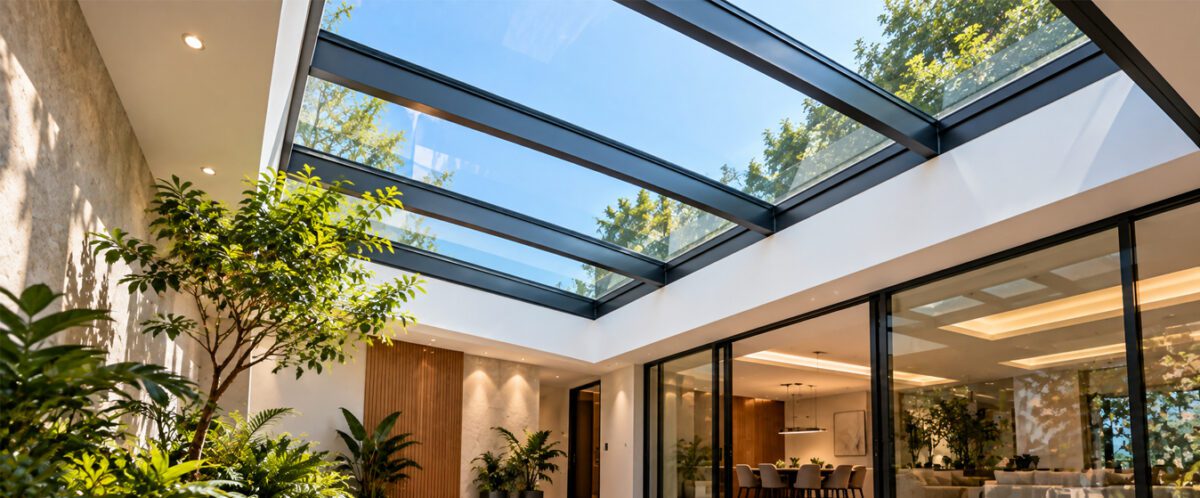

Skylights bring natural light into rooms that receive little sunlight through regular windows. They’re commonly used in staircases, corridors, bathrooms and commercial buildings to brighten indoor spaces.
However, choosing a skylight involves more than deciding its size and design. The glass must be safe, the system should limit unwanted heat, and the installation must prevent water leakage.
Before comparing skylight manufacturers in India, it’s useful to understand the types of skylights available and the key factors that affect their performance.
A skylight can brighten a room and reduce the need for artificial lighting during the day. The amount of light it provides depends on its size, position and the glass used.
Poor design can lead to excess heat, glare or water leakage. A suitable skylight should meet the building’s lighting needs, fit the roof properly and withstand local weather conditions.
Here are the modern skylight designs to suit the needs of a space.
Skylight glass must meet safety requirements for overhead use. Toughened laminated glass is one option. It has a laminated layer that helps hold broken pieces together if the glass breaks.
The glass also affects heat and glare. Solar control glass helps reduce heat entering the room, while tinted glass softens bright sunlight. The suitable option depends on the building’s location, exposure to sunlight and safety requirements.
When comparing glass skylight manufacturers, check the glass specifications and confirm that they suit the intended application.
A skylight should be sufficient to let in enough light without making the room too hot. The size and location of it determine the quantity of sunshine that can enter, and the glass will determine how much heat gets through.
This is particularly important in India where the summer heat can make indoor environments uncomfortable. Solar control glass will help reduce heat gain. The orientation of the building and the use of the room should also determine the location of the skylight.
The roof’s design affects how a skylight can be installed. Its slope, available space and ability to support the system need to be checked before work begins.
Two common options are:
The suitable option depends on the roof design and the skylight’s specifications. Accurate measurements and secure fixing are also necessary for a proper fit.
Water can enter through gaps around the skylight if the joints are not sealed properly or the roof doesn’t drain well. This can lead to damp patches and damage inside the building.
Flashing helps direct rainwater away from the roof opening, while seals close gaps around the frame. These details need particular attention in areas that receive heavy monsoon rain.
Good materials alone are not enough. Correct installation is also necessary to prevent leakage.
The frame holds the glass in place and connects the skylight to the roof. The quality, fittings and finish will impact on the long term performance of the system. The components should be assembled correctly without gaps or issues.
Today, skylight designs are offered in a variety of shapes and sizes to accommodate various types of buildings. Depending on the project, it may be necessary to install a simple rectangular skylight, or a larger glazed area or an unusual size. The design should be appropriate for the building and meet its safety and functional needs.
Skylights should be cleaned regularly to get rid of dust and rain marks. Drainage points, seals and joints should also be inspected regularly for damage or blockages.
Before installing, consider access for cleaning, particularly high or steep roofs with skylights. Inquire with the manufacturer about maintenance and installation procedures, as well as post-sales support, to understand how to keep the system running smoothly and resolve issues.
If you are considering a skylights manufacturer, inquire about the kinds of post-installation assistance that are offered.
Glass safety, heat control, roof compatibility and waterproofing all affect a skylight’s performance. Considering these factors before installation can help prevent common problems and keep the system in good condition.
Aparna Externa, a leading skylight manufacturer, offers premium solutions, including skylight systems for building projects. Reviewing your lighting needs and roof requirements can help you assess suitable options.
A skylight is a glazed opening in the roof that brings natural light into a building. Some designs can also provide ventilation.
Toughened laminated glass is one option for overhead glazing. Solar control glass can help reduce heat gain, depending on the system and site conditions.
They can increase indoor heat if too much sunlight passes through the glass. Suitable glazing and careful placement can help control heat gain.