In modern architecture, facades are expected to do far more than define a building’s appearance. They function as protective envelopes, regulating environmental impact, safeguarding structural materials, and contributing to long-term building efficiency. With increasing exposure to harsh climatic conditions, air pollution, and urban wear, facade materials are under constant stress throughout their lifecycle.
Surface finishing plays a critical role in determining how well facade systems perform over time. An inadequate finish can lead to corrosion, fading, peeling, and frequent maintenance, while a high-performance finish can significantly extend the life of facade components. Powder coating has emerged as one of the most effective solutions in this context, particularly for aluminium and metal-based facade systems.
Used extensively by Powder Coating Manufacturers, it offers a balance of durability, protection, and visual consistency. Its contribution goes beyond aesthetics, directly influencing facade performance, maintenance requirements, and long-term cost efficiency.
In this blog, we will understand how powder coating works and why it is specified for modern facades, which is essential when designing buildings meant to last.
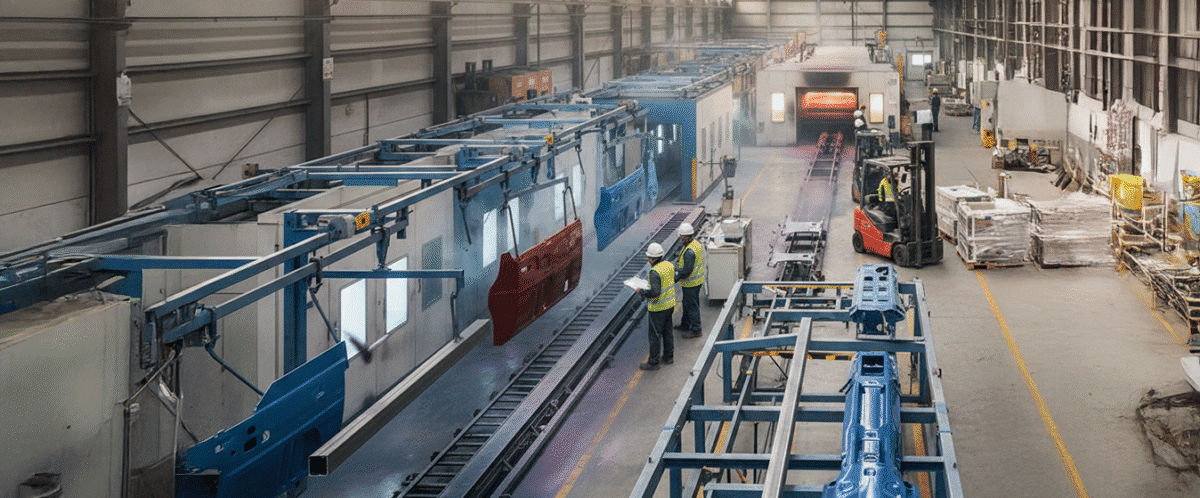
Powder coating is a dry finishing process in which finely ground particles of resin and pigment are electrostatically charged and applied to a metal surface. Once applied, the coated component is cured at high temperatures, allowing the powder to melt and chemically bond into a continuous, protective film. This curing process creates a finish that is thicker, more uniform, and more durable than most liquid paint systems.
In architectural applications, powder coating is primarily used on aluminium and steel components that form part of the building envelope. These include facade panels, curtain wall frames, window and door profiles, louvres, fins, and balcony railings. The electrostatic application allows the powder to adhere evenly to complex profiles and sharp edges, ensuring consistent coverage across large facade assemblies.
Powder coating does not rely on solvents, which makes it more environmentally responsible while also reducing common issues such as sagging, dripping, or uneven thickness. Architectural-grade powder coatings are specifically formulated to withstand prolonged outdoor exposure, making them suitable for demanding facade conditions.
Modern facades are designed for longevity, energy efficiency, and minimal maintenance. As buildings become taller and more complex, facade access for repairs becomes difficult and expensive. This places greater importance on finishes that can maintain their integrity over long periods without frequent intervention.
Powder coating is important because it enhances the durability of facade components at a material level. Forming a protective barrier over metal surfaces reduces direct exposure to moisture, oxygen, pollutants, and UV radiation. This protection slows down degradation processes that would otherwise compromise structural and visual performance.
Additionally, architectural design today demands visual consistency across large surface areas. Variations in colour, gloss, or texture can disrupt facade harmony. Powder coating delivers uniform finishes across batches, which is why it is widely specified by architects and sourced from established Powder Coating brands in India for large-scale projects.
Powder coating offers a combination of functional and aesthetic benefits that make it particularly effective for facade systems.
One of the most significant advantages is durability. The cured coating forms a tough, impact-resistant surface that can withstand daily environmental stress without cracking or peeling. This durability is critical for external facades exposed to wind, dust, and airborne debris.
Corrosion resistance is another key benefit. By sealing the metal substrate, powder coating prevents moisture penetration and oxidation, which are leading causes of facade deterioration. This is especially valuable in coastal regions and industrial zones.
If done with the help of reliable powder coating manufacturers, it also provides excellent colour stability. Architectural-grade coatings are designed to resist fading and chalking under UV exposure, ensuring facades retain their intended appearance for many years.
From a sustainability perspective, powder coating is solvent-free and generates minimal waste. Overspray can often be recovered and reused, which powder coating services more resource-efficient than conventional painting methods.
Corrosion is one of the most damaging factors affecting metal facade components. When moisture and oxygen reach the metal surface, oxidation begins, leading to rust, pitting, and structural weakening. Powder coating acts as a continuous barrier, preventing direct contact between the metal and external elements.
This protective layer is particularly important for aluminium facades, curtain wall systems, and balcony railings that are constantly exposed to rain and humidity. By reducing corrosion risks, powder coating significantly extends the service life of facade components.
Sunlight, especially ultraviolet radiation, can break down conventional coatings over time. This results in fading, chalking, and surface degradation. High-quality powder coatings are engineered to resist UV exposure, allowing facades to maintain their color and finish even under prolonged sunlight.
Environmental pollutants, including industrial emissions and airborne chemicals, can also degrade facade surfaces. Powder coating provides resistance to these factors, ensuring consistent facade performance in urban environments.
Powder-coated surfaces are harder and more abrasion-resistant than liquid-painted finishes. This increased hardness reduces surface damage caused by cleaning activities, wind-driven particles, or minor impacts. Stronger surface integrity means fewer repairs and longer intervals between refurbishments.
Facades experience constant temperature variations, causing materials to expand and contract. Powder coatings are designed to accommodate these movements without losing adhesion or cracking. Their thermal stability ensures reliable performance across varied climatic conditions, from extreme heat to seasonal humidity.
Because powder coating maintains its integrity over long periods, facades require less frequent maintenance. Recoating cycles are significantly extended, reducing lifecycle costs and minimising operational disruptions. This makes powder coating a cost-effective solution over the building’s lifespan.
Proper surface preparation is essential for coating performance. Cleaning, degreasing, and pretreatment ensure strong adhesion between the coating and the metal surface. Inadequate preparation can lead to premature failure, regardless of coating quality.
Architectural applications require exterior-grade powders with enhanced UV and weather resistance. Selecting the correct grade based on exposure conditions is crucial for long-term durability.
Uniform application and controlled curing temperatures determine coating strength and adhesion. Leading Powder Coating Manufacturers follow strict process controls to ensure consistent performance.
Facade performance varies based on location. Coastal, industrial, and high-pollution areas demand higher-performance coating systems to ensure longevity.
Standards such as AAMA 2603, 2604, and 2605 define durability benchmarks for architectural coatings. Compliance with these standards ensures reliable performance over time.
Powder coating is commonly used for:
These elements benefit from the coating’s durability, uniform finish, and resistance to environmental stress.
Powder coating is an effective solution for improving the durability and long-term performance of facade systems. By protecting aluminium and metal surfaces from corrosion, UV exposure, and everyday environmental wear, it helps facades retain their strength and appearance over time. This results in lower maintenance needs and longer service life for building exteriors.
When combined with proper material selection and quality application, powder coating supports consistent facade performance across different climatic conditions. At Aparna Externa, facade systems are designed with a focus on durability, precision, and long-term reliability, ensuring exterior solutions that perform well and last longer.
Well-planned and expertly applied powder coating services are essential steps in delivering facade systems that maintain both functional integrity and visual consistency over their entire lifecycle.