
A building’s entrance should feel welcoming, right? It’s the first impression people get.
Too often, entrances and outdoor walkways are an afterthought. They get exposed to harsh sunlight, sudden rain, and dust, which makes it unpleasant for people to move through. Traditional roofing can block the weather, but it also blocks natural light and adds bulk, ruining the clean lines of a building’s design.
This is a common issue in commercial buildings, residential complexes, and schools or hospitals where many people pass through every day. Dark, heavy entrances feel uninviting, while poorly designed covers can spoil the building’s modern look.
A glass canopy system fixes this perfectly. It protects people from the sun and rain while letting in daylight to keep spaces bright and open. When installed by a skilled canopies manufacturer, glass canopies fit smoothly with modern architecture, enhancing both the building’s style and user experience.
In this blog, we will explore the different types of glass canopy systems, their key benefits, and where they can be used to improve both function and aesthetics.
A glass canopy system is an overhead protective structure made using toughened or laminated safety glass, supported by engineered framing or point-fixing components. These systems are commonly installed above entrances, walkways, balconies, and semi-open areas where shelter is required without enclosing the space.
Glass canopies maintain visual openness, unlike traditional metal sheets or solid projections. They let natural light reach the area below while keeping users protected from rain and direct sunlight. Depending on the design, glass canopy systems can be attached directly to the facade or built as standalone structures.
From an execution perspective, the role of a specialised canopies manufacturer becomes critical. Precision in glass specification, fixing design, and load calculations ensures that the canopy performs safely while maintaining a clean, minimal appearance.
The growing use of glass canopies across Indian buildings reflects a broader shift in architectural priorities. Transitional spaces such as entrances, waiting zones, and walkways are now designed with the same attention as interior areas.
A thoughtfully engineered glass canopy system supports this shift by offering protection without visual obstruction. In climates where sunlight is strong and rainfall unpredictable, this balance becomes especially relevant.
As a result, architects and developers increasingly rely on experienced canopies manufacturers to deliver systems that combine performance, safety, and design consistency.
Frameless glass canopies use point fixings like spider fittings or pin-mounted supports instead of visible frames. The glass appears suspended, giving the canopy a light and modern presence.
These systems are often specified for:
Because structural elements are minimal, engineering precision from the canopies manufacturer plays a vital role in ensuring safety and long-term performance.
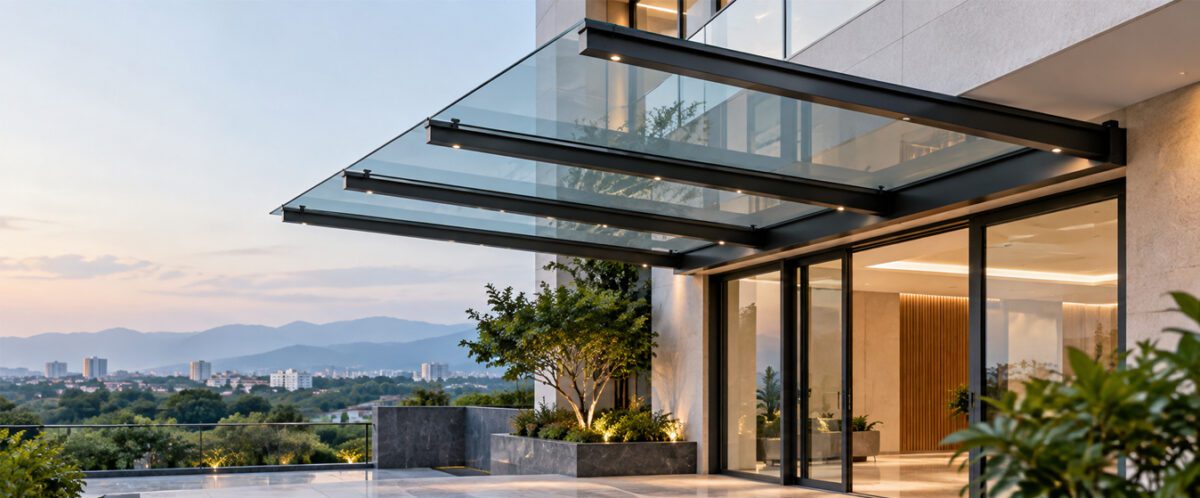
Cantilevered glass canopies extend outward from the building and are supported from one side only. This keeps the entrance area free from columns and visual clutter.
They are commonly used in:
A properly designed glass canopies system ensures that loads are transferred safely back to the building structure without compromising aesthetics.
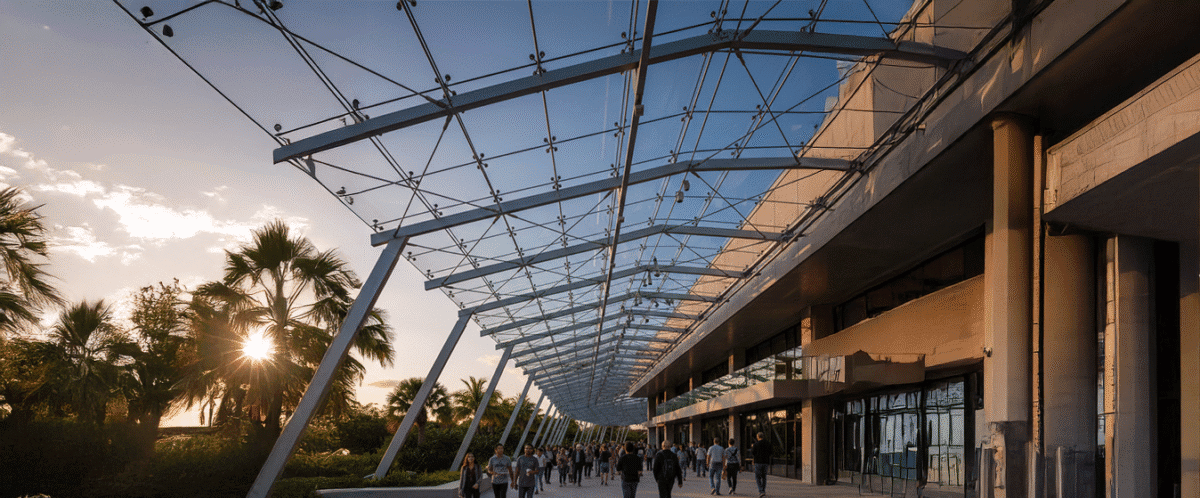
Suspended glass canopies use tension rods or cables fixed back to the facade. These elements become part of the visual design while allowing larger spans.
Such systems are often seen in:
Here again, coordination between design and an experienced canopies manufacturer is essential to achieve both strength and visual balance.
Framed glass canopy systems use slim aluminium or hybrid steel structures to support glass panels. These are suitable for larger covered areas such as walkways and outdoor seating zones.
They are commonly used for:
Framed solutions allow greater flexibility in glass selection and drainage design within a single glass canopies system.
Glass canopy systems improve facade appearance while maintaining openness. They allow daylight to pass through, improve user comfort, and protect building entrances from weather exposure.
From a performance perspective, a professionally engineered glass canopies system offers durability, safety, and low maintenance. When developed by a reliable canopies manufacturer, the system also ensures consistency in material quality and detailing.
Glass canopy systems are widely used in:
Across all these applications, the effectiveness of the system depends heavily on proper design, fabrication, and installation by an experienced canopies manufacturer.
Every glass canopy must account for load conditions, glass thickness, fixing details, drainage, and thermal movement. These factors directly affect safety and lifespan.
Choosing the right canopies manufacturer ensures that the glass canopies system is engineered to suit site conditions, usage patterns, and long-term performance expectations.
Glass canopy systems protect entrances and outdoor spaces while keeping them bright, open, and welcoming. They combine functionality with style, providing shelter from sun and rain without compromising a building’s modern look.
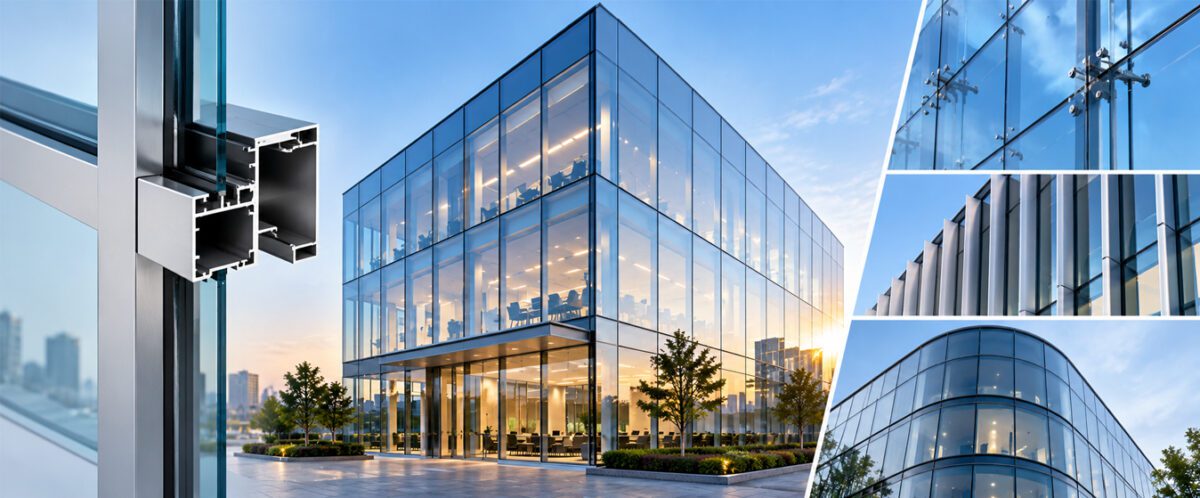
When integrated into the overall facade design, a glass canopy becomes a lasting architectural feature, not just an add-on. Aparna Externa glass canopy solutions are crafted as part of a complete aluminium and glass system. With precise engineering and expert installation, these canopies deliver durability, performance, and seamless architectural appeal, enhancing both functionality and elegance.
Q1. What are the different types of canopies used in buildings?
There are several types of canopies used in residential, commercial, and institutional buildings. Common options include metal canopies, polycarbonate canopies, fabric canopies, and glass canopy systems. Among these, glass canopies are preferred for modern architecture because they provide weather protection while allowing natural light and maintaining a clean, modern look.
Q2. How does a glass canopy system differ from traditional canopy materials?
A glass canopy system provides weather protection while allowing natural light to pass through, unlike traditional metal, fabric, or polycarbonate canopies that block daylight. It maintains visual openness, enhances modern facade designs, and delivers better durability and long-term appearance when an experienced canopies manufacturer designs and installs it.
Q3. What are the benefits of installing a canopy?
Installing a canopy helps protect people and building entrances from rain, heat, and weather exposure. Canopies also improve user comfort, reduce wear on doors and windows, and enhance the overall appearance of a building. Glass canopy systems offer additional benefits such as better daylight access, visual openness, and long-term durability.
Q4. Where are glass canopy systems commonly used?
Glass canopy systems are commonly used in commercial buildings, office complexes, residential apartments, hospitals, educational institutions, retail storefronts, and hospitality projects. They are especially effective at main entrances, drop-off zones, walkways, balconies, and outdoor circulation areas where protection is required without closing the space.
Q5. What factors should be considered before installing a glass canopy system?
Before installing a glass canopy system, factors such as glass type and thickness, load requirements, fixing method, drainage design, and compatibility with the building structure should be evaluated. Working with an experienced canopies manufacturer is important to ensure the system meets safety standards, performs well in local conditions, and lasts over time.