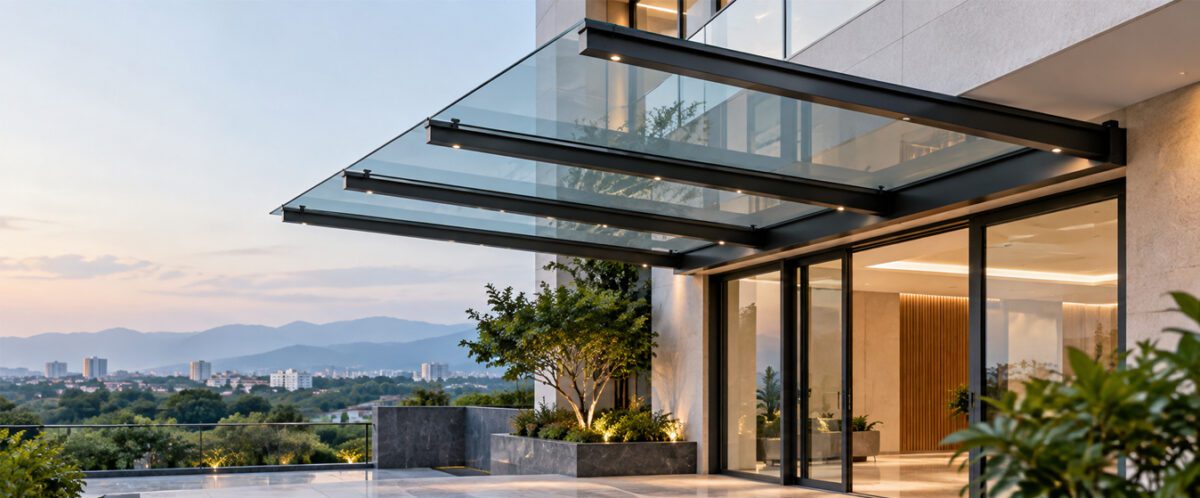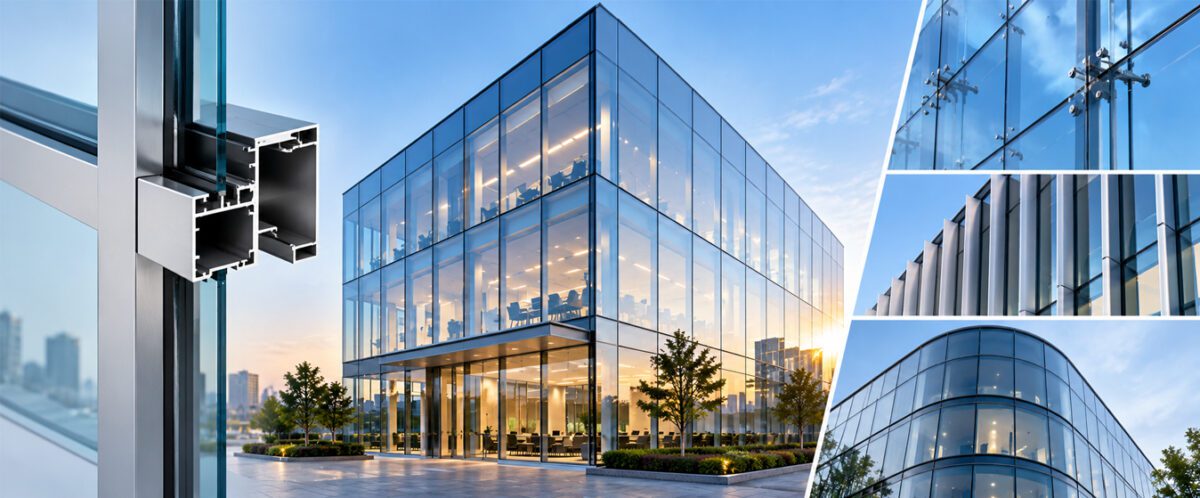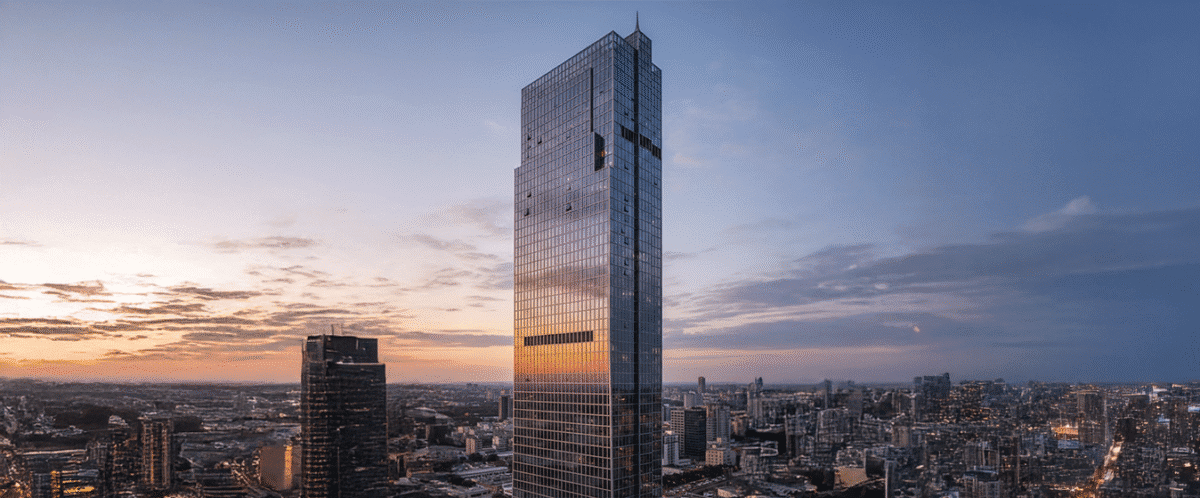
High-rise buildings now represent urban skylines, and their facades must do more than look good. They need to protect the structure, manage heat and light, and perform reliably at height. In tall buildings, facade challenges increase. High wind loads, water leakage risks, thermal movement, and installation errors can affect safety, comfort, and long-term performance. Even small design gaps can lead to costly issues over time. A well-designed Aluminium Glass Curtain Wall System acts as a high-performance building envelope. With the right engineering and execution, a glass curtain wall system controls weather impact, improves energy efficiency, and enhances architectural appeal.
This article explains the key design and execution challenges involved in delivering reliable curtain wall systems for high-rise buildings.
A Curtain Wall System is a non-load-bearing facade fixed to the structural frame of a building. Unlike conventional walls, it does not carry floor or roof loads. Its primary role is to protect the interior from external elements such as wind, rain, heat, and noise, while also shaping the building’s appearance.
In high-rise construction, this separation between structure and facade becomes essential. Tall buildings are designed to move slightly under wind and seismic forces. The curtain wall must accommodate this movement without cracking glass, loosening joints, or allowing water ingress. This makes curtain wall design in high-rise buildings far more complex than in low-rise structures.
Aluminium and glass work well together in tall buildings. Aluminium is lightweight yet strong, which reduces the load on the building structure. It also offers excellent resistance to corrosion and performs well under varying weather conditions. Glass, when engineered correctly, allows natural light, improves visual openness, and supports modern architectural design.
Together, aluminium and glass create a facade system that balances structural performance with aesthetics. This combination also allows flexibility in design, whether the requirement is a clean, minimal look or a more expressive facade geometry.
Stick-built curtain wall systems are assembled on site using individual aluminium members and glass panels. This system allows design flexibility and can be cost-effective for smaller buildings. However, in high-rise projects, stick systems come with limitations.
On-site assembly at height increases dependence on skilled labour and exposes materials to weather conditions during installation. Maintaining consistent quality across multiple floors can be challenging, especially on large towers. For these reasons, stick-built systems are less commonly used for very tall buildings.
Unitised curtain wall systems are factory-assembled panels that are installed on site as complete units. This approach offers better quality control, faster installation, and improved safety. For high-rise buildings, unitised systems are often the preferred choice.
Since most fabrication and glazing take place in controlled factory conditions, the final installation is more precise. Unitised systems also reduce on-site labour and help meet tight construction timelines, which is critical in large urban projects.
Semi-unitised systems combine features of both stick and unitised approaches. Structural framing may be installed on site, while glazed units are prefabricated. These systems are useful where site constraints, phased construction, or design variations require flexibility without compromising performance.
Wind load is one of the most important design factors for high-rise curtain walls. As building height increases, wind pressure rises sharply. The curtain wall system must resist these forces without excessive deflection or damage.
In addition to wind, tall buildings experience inter-storey movement and slab deflection. The curtain wall must be detailed to absorb this movement through flexible connections and movement joints. If this is not addressed during design, it can lead to glass breakage, sealant failure, or long-term performance issues.
Aluminium conducts heat quickly, which makes thermal performance a key challenge. Without proper insulation, an aluminium glass curtain wall system can allow unwanted heat gain or loss, increasing energy consumption.
Thermal breaks within aluminium profiles help reduce heat transfer. When combined with high-performance glazing such as Low-E glass, the system can achieve acceptable thermal performance even in warm Indian climates. Designers must carefully balance transparency, solar control, and insulation to meet energy goals.
Water leakage is a common concern in tall buildings, especially during heavy rain accompanied by strong winds. At higher floors, wind-driven rain can force water into facade joints if detailing is inadequate.
Effective drainage systems, pressure equalisation chambers, and high-quality sealants are essential. Full-scale mock-up testing helps identify weak points early and ensures the curtain wall performs as intended once installed.
Glass selection affects safety, comfort, and performance. Laminated glass is widely used in high-rise buildings due to its safety characteristics and acoustic benefits. Toughened glass is chosen where higher impact resistance is required.
Advanced glazing options such as Low-E and solar-control glass help manage heat gain while maintaining daylight. Selecting the right glass depends on building orientation, climate, and usage patterns.
Aluminium framing supports the glass and transfers loads to the building structure. Mullion depth, profile strength, and connection detailing must be engineered carefully to handle wind pressure and movement.
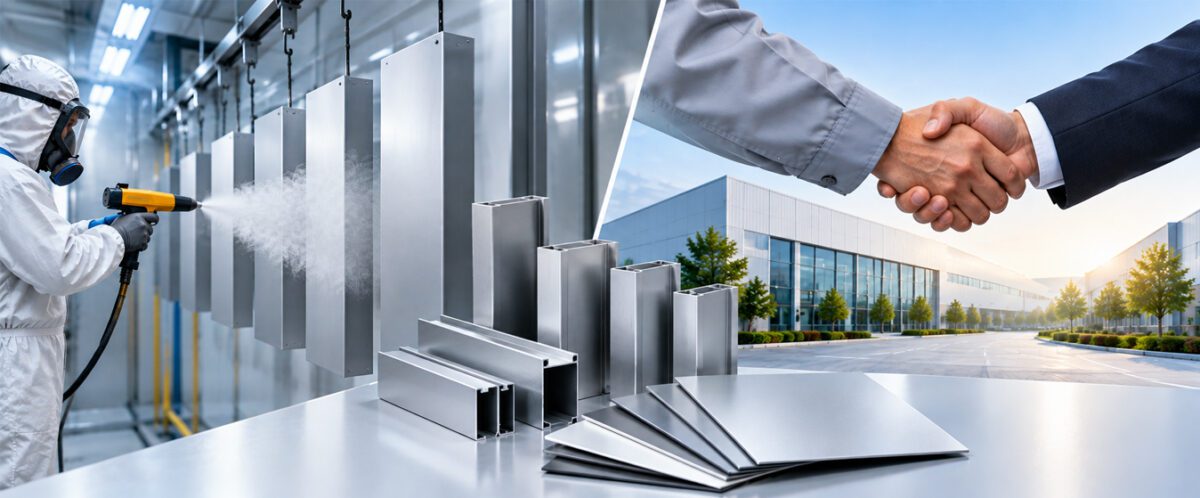
Surface finishes like powder coating and anodising protect aluminium from corrosion and environmental damage. In coastal or polluted urban environments, finish quality directly affects the facade’s lifespan.
When aluminium comes into contact with other metals, galvanic corrosion can occur if proper isolation is not provided. Designers must ensure compatible materials and include protective measures such as gaskets and coatings to prevent long-term deterioration.
Installing a glass curtain wall system in a high-rise building involves complex logistics. Large panels must be transported, lifted, and positioned safely at significant heights. Crane planning, lifting methods, and sequencing need careful coordination.
Any damage during handling can delay the project and increase costs. This makes planning and supervision critical during installation.
Tolerance issues become more visible as building height increases. Small deviations in the structural frame can accumulate over multiple floors. Curtain wall systems must include adjustable connections to accommodate these variations.
Accurate surveying, regular checks, and skilled installation teams help maintain alignment and joint consistency across the facade.
Curtain wall installation demands specialised skills. Teams must understand facade systems, sealing methods, and safety procedures. Coordination with structural and MEP trades is essential to avoid conflicts and rework, especially on fast-track projects.
Fire safety is a critical aspect of curtain wall design in high-rise buildings. Proper fire stopping at slab edges and compliant glazing specifications help limit fire spread.
Performance testing, including air, water, and structural tests, validates the curtain wall system before full-scale installation. In high-rise projects, such testing ensures reliability and reduces long-term risk.
Digital tools have changed how curtain wall systems are designed and delivered. BIM enables better coordination between facade, structure, and services, reducing errors and rework.
Digital fabrication improves accuracy in aluminium profile manufacturing, while digital models support better planning and execution. These tools are especially valuable for complex high-rise facades.
Sustainability is now a key consideration in facade design. While glass facades can increase energy demand, advances in glazing and insulation have improved performance significantly.
Aluminium is fully recyclable, making it a sustainable material when used responsibly. The challenge lies in balancing visual transparency with energy efficiency, particularly in warm and humid climates.
An aluminium glass curtain wall system is not just a design feature. In high-rise buildings, it is a carefully engineered envelope that must perform under demanding conditions. Successful outcomes depend on early design integration, accurate engineering, quality materials, and disciplined execution.
Aparna Externa brings together facade design expertise, digital engineering, precision manufacturing, and on-site execution to deliver reliable aluminium and glass curtain wall solutions. With a strong focus on performance, safety, and architectural quality, the team supports the development of India’s modern urban skyline.
Q1. What is an aluminium glass curtain wall system used for in high-rise buildings?
An aluminium glass curtain wall system acts as the outer skin of a high-rise building. It does not carry the building’s load but protects it from wind, rain, heat, and noise. At the same time, it allows natural light to enter and improves the overall appearance of the building. These systems are commonly used in offices, apartments, and mixed-use towers.
Q2. What are the main challenges of installing glass curtain wall systems in tall buildings?
Installing glass curtain wall systems in tall buildings can be complex. Teams need to handle strong wind pressure, building movement, and ensure that water does not leak inside. Working at height requires careful planning, skilled workers, and precise installation to maintain safety and quality.
Q3. How do aluminium glass curtain wall systems improve building performance?
Aluminium glass curtain wall systems help improve building performance by letting in natural light while reducing air and water leakage. When used with energy-efficient glass, they help maintain indoor comfort and reduce heat gain. Proper design and installation also ensure long-lasting performance and lower maintenance needs.