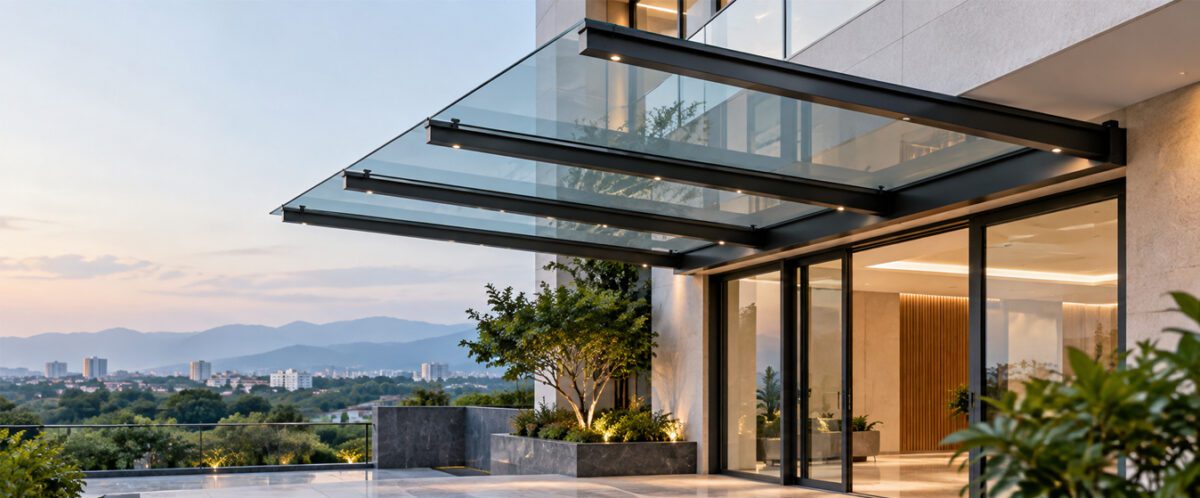
Ever noticed how some buildings still look premium after years, while others quickly start showing stains, leakage, or faded panels?
Most facade problems begin much earlier than people think. Poor material selection, incorrect installation, or weak finishing often lead to water seepage, rising indoor heat, and expensive maintenance later. Once these issues appear, fixing them becomes difficult and costly.
That is why aluminium glass facade systems play a much bigger role in modern construction today. They do not just improve appearance. They help buildings handle daily weather exposure while maintaining long-term performance. With the right aluminium facade systems, proper installation, and regular maintenance, buildings stay durable, efficient, and visually consistent for years.
If you look at most new commercial buildings today, one thing stands out immediately: Glass and aluminium are everywhere.
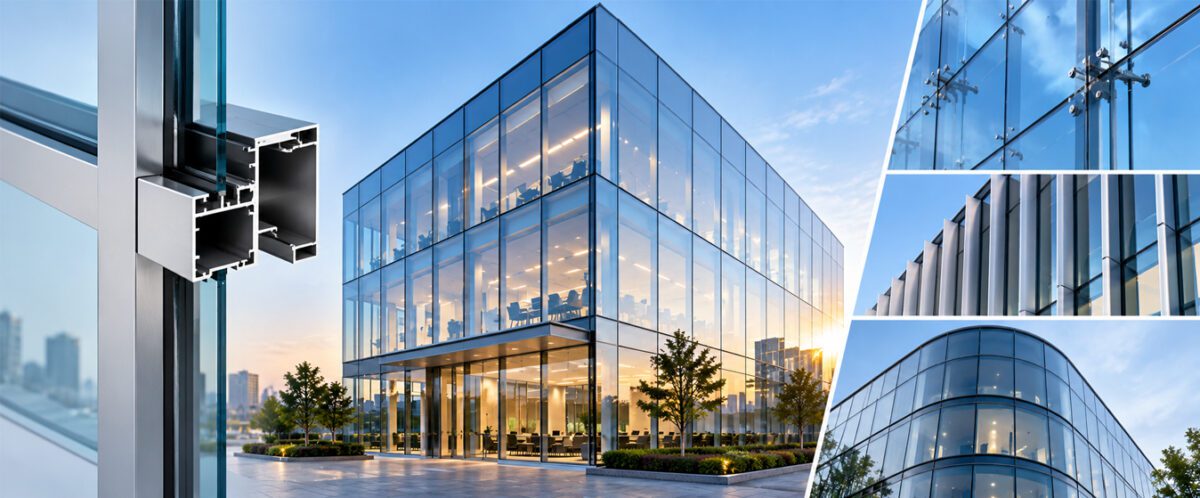
Aluminium glass facade systems are exterior building systems made using aluminium frames and glass panels. These systems cover the outer surface of the building and protect it from outside weather conditions.
Unlike traditional walls, facade systems do not carry the building’s main weight. Instead, they act like an outer shield that handles rain, wind, sunlight, and temperature changes while staying attached to the building structure.
A typical facade system includes:
Since every component is connected, even a small failure can affect the overall facade performance over time.
One major reason aluminium facade systems are widely used in modern facade design is that aluminium is lightweight and durable at the same time. It does not rust easily, lasts for years, and supports large glass panels without putting too much load on the structure.
Glass also improves daylight, insulation, and indoor comfort.
Modern glazing helps bring in natural light, reduces outside noise, and improves temperature control inside the building. That is why aluminium glass facade systems are now common in offices, malls, airports, hotels, hospitals, and premium residential projects.
Not every building uses the same type of facade system. The choice usually depends on the building height, project size, design style, and installation timeline.
In stick-built systems, the facade gets assembled directly at the site.
Workers first install vertical aluminium sections, then horizontal sections, followed by the glass panels. Everything is fixed step by step during construction.
These systems are commonly used for:
One advantage of this system is flexibility. Since the work happens on-site, adjustments can be made more easily during installation.
Transportation also becomes simpler because materials arrive in smaller parts instead of complete panels.
At the same time, the final quality depends heavily on workmanship. Poor sealing or uneven fitting can later create leakage and air gap problems.
Large commercial towers usually use unitised facade systems.
Here, complete facade panels are prepared inside a factory before reaching the site. Each unit already includes aluminium frames, glass panels, and sealing systems.
Once delivered, the panels are lifted and fixed directly onto the building.
This speeds up installation significantly.
Since most of the work happens inside controlled factory conditions, the quality also stays more consistent.
Unitised aluminium glass facade systems are especially useful in high-rise buildings because they handle movement and weather conditions more effectively.
Some buildings aim for a smooth glass look with very little visible framing.
Structural glazing systems help achieve that appearance. The glass gets fixed using strong silicone bonding instead of visible metal caps.
Semi-structural systems follow a mixed approach where some aluminium sections remain visible.
These systems are popular in modern facade design because they create a cleaner and more premium exterior finish.
Spider glazing systems are designed for buildings that require maximum glass visibility with minimal framing.
Instead of large aluminium sections, specially designed spider fittings hold the glass panels together, creating a cleaner and more transparent exterior appearance.
Common applications:
Key advantages:
Curtain wall systems are widely used in high-rise commercial buildings. These systems create an external protective layer using aluminium frameworks and glass panels without carrying the building’s structural load.
They improve both facade performance and exterior aesthetics.
Common applications:
Key advantages:
Double-skin facade systems use two layers of glass separated by an air cavity. This design helps improve thermal insulation and reduce outside noise.
These systems are commonly used in energy-efficient commercial projects.
Common applications:
Key advantages:
A facade may look good initially, but its real performance depends on the materials used behind the surface.
Different grades of aluminium offer different levels of strength, durability, and finishing quality. Choosing the right material matters because facade systems remain exposed to outside conditions throughout the year.
Over time, the facade faces:
The material should handle all this without bending, fading, or weakening.
6063 aluminium is commonly used in facade systems because it gives a smooth finish and works well for profile shaping.
6061 aluminium is stronger and is generally used where higher strength is required.
The final material selection depends on the project type, building height, and weather conditions.
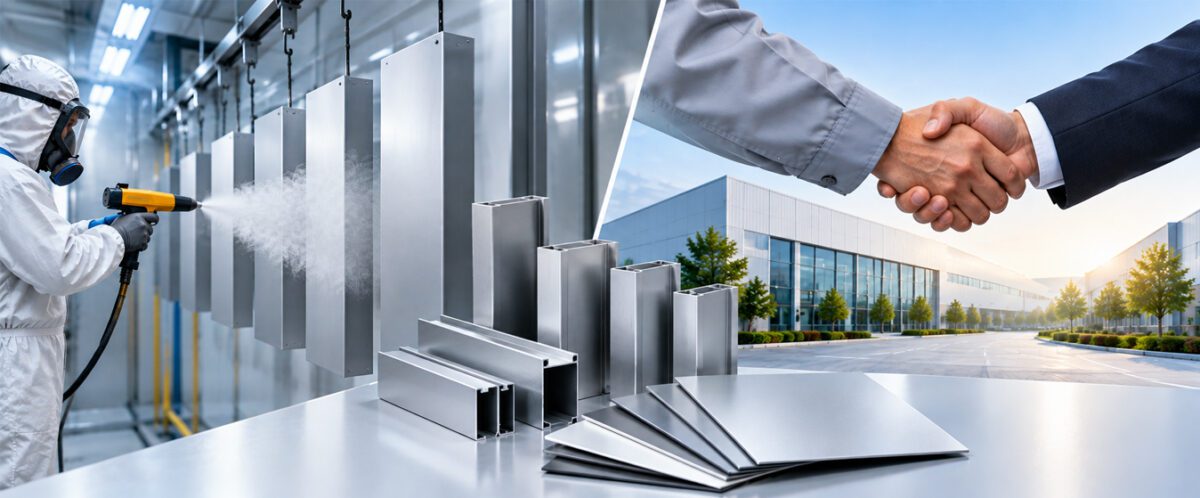
Powder coating is widely used because it gives a clean finish and protects the aluminium surface from weather damage.
PVDF coating offers even better protection, especially in areas with strong sunlight, pollution, or coastal weather conditions.
Anodised finishes are also common in projects that want a metallic appearance.
A good surface finish also helps aluminium facade systems maintain their durability for longer.
Glass selection affects both comfort and performance.
Double-glazed glass helps reduce heat transfer. Laminated glass improves safety and reduces outside noise. Toughened glass offers better strength, while Low-E glass helps control heat entering the building.
In busy city areas, acoustic glass becomes useful because it helps reduce traffic and outside noise.
Even high-quality facade materials need accurate installation to perform properly over time.
Before installation starts, engineers and facade teams study the building properly.
They check:
This stage helps decide how the facade will be fixed safely onto the structure.
The aluminium sections are cut, shaped, and prepared inside factories using precision machines.
Before sending materials to the site, teams inspect the dimensions, finish quality, and alignment properly.
Factory preparation reduces mistakes during installation.
Support brackets and anchors help hold the facade onto the building structure.
Their positioning must be accurate. Even small mistakes can affect glass alignment and overall appearance.
Proper support systems also help the facade handle movement caused by temperature changes and wind pressure.
After fixing the support brackets, workers install vertical and horizontal aluminium sections.
Alignment becomes very important here because uneven fixing can create visible gaps or irregular lines on the building surface.
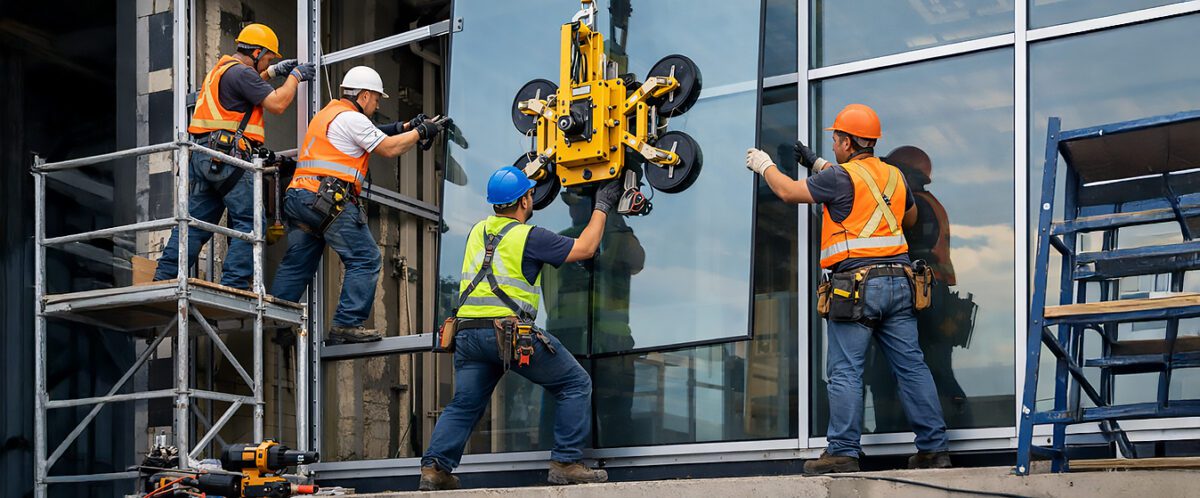
Glass panels are then carefully placed using lifting equipment.
Once installed, teams add sealants, rubber gaskets, and waterproofing systems to stop water and air from entering inside.
Drainage systems are also added so that moisture does not collect within the facade.
Before project completion, the facade goes through different quality checks.
These include:
These tests help ensure the facade performs properly after installation.
A facade must handle daily weather and structural stress consistently.
Modern aluminium facade systems help reduce heat transfer from outside to inside.
This improves indoor comfort and reduces the load on air-conditioning systems, especially in large commercial buildings.
Rain, humidity, and pollution constantly affect building exteriors.
Good sealing systems and drainage channels help prevent water leakage and moisture buildup.
Tall buildings face strong wind pressure regularly.
The facade system should handle this movement safely without damaging the glass or aluminium sections.
Noise reduction has become important in city projects.
Special glazing systems help reduce outside sound, making offices, hospitals, hotels, and homes more comfortable inside.
A facade system cannot stay perfect forever without maintenance.
Regular maintenance helps the facade perform better for longer.
Minor facade issues can become expensive repairs if ignored for too long.
Loose fittings, damaged sealants, or blocked drainage systems can slowly affect the entire facade.
Regular inspection helps identify these issues before they become serious.
Buildings near highways, industrial areas, or coastal regions usually need more frequent cleaning because dust and pollution settle faster.
Using mild cleaning materials is important. Harsh chemicals can damage the surface coating.
Sealants naturally wear out over time because of sunlight and weather exposure.
Regular inspection helps identify cracks or gaps before leakage starts.
Support brackets, fasteners, and fittings should also be checked regularly for corrosion or loosening.
Ignoring these areas can eventually affect facade safety.
Glass panels should be checked for cracks, scratches, or coating damage.
Older buildings can also improve facade performance through upgrades instead of replacing the full system.
Every project has different requirements.
A facade system suitable for a low-rise office may not work for a high-rise commercial tower.
Weather conditions, building height, maintenance needs, and energy goals all affect the selection process.
For example, coastal projects usually require stronger corrosion protection. Buildings in hot climates may need better thermal performance and heat-control glass.
Along with materials, the experience of the facade company also matters.
Engineering support, manufacturing quality, installation expertise, and long-term service all influence how well the system performs over time.
Aluminium glass facade systems have become an important part of modern construction because they offer both performance and appearance.
A well-designed facade improves indoor comfort, reduces heat gain, and protects the building over the long term. But achieving that performance depends on proper material selection, correct installation, and regular maintenance.
As buildings continue moving towards smarter and more efficient construction, the demand for durable aluminium facade systems and modern facade design solutions will continue growing.
With expertise in facade engineering, precision manufacturing, and customised exterior solutions, Aparna Externa delivers aluminium facade systems designed for long-term durability, performance, and modern architectural requirements.
Q1. Are aluminium glass facade systems suitable for coastal areas?
A. Yes. Aluminium facade systems with proper coatings like PVDF or anodised finishes perform well in coastal environments because they offer better corrosion resistance against moisture and salt exposure.
Q2. Can damaged glass panels in a facade system be replaced individually?
A. Yes. Individual glass panels can usually be replaced without removing the complete facade system, depending on the system design and installation method.
Q3. Which is more cost-effective for large buildings: stick-built or unitised facade systems?
A. Unitised facade systems are generally more cost-effective for large high-rise projects because they reduce installation time and improve execution speed. Stick-built systems are often preferred for smaller or customised projects.