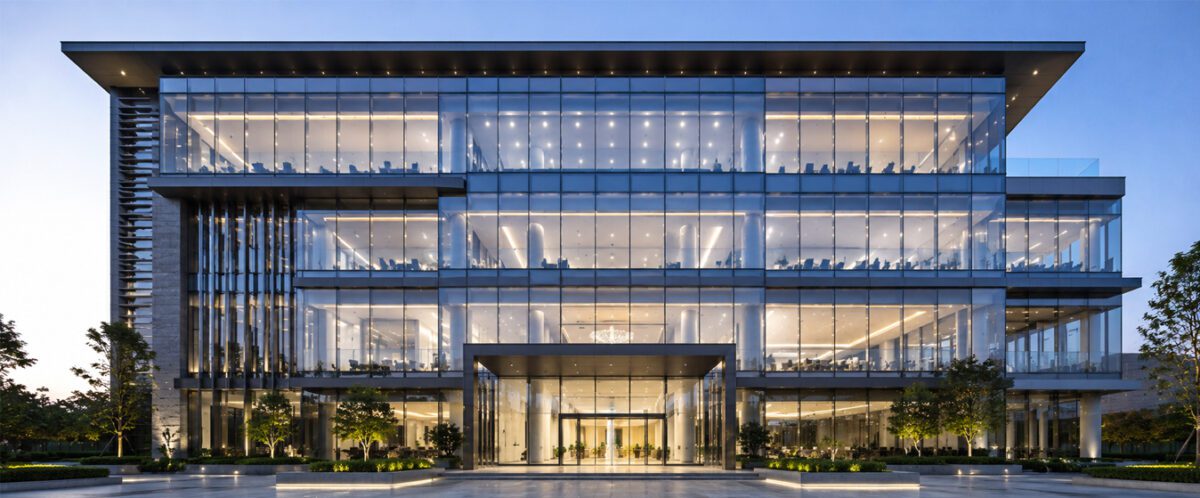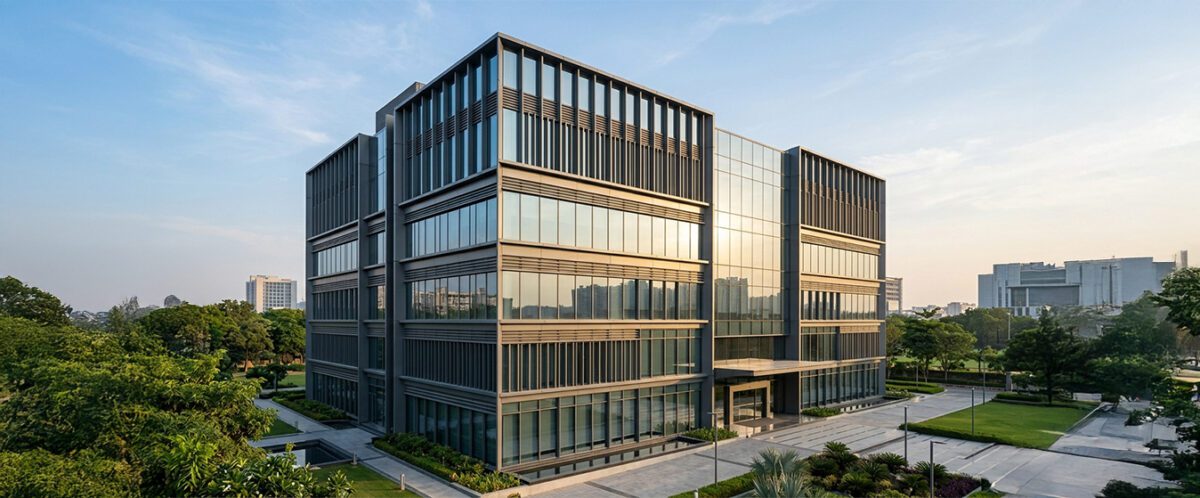
Walk up to any urban building and the facade does the talking before anything else does.
You notice the surface, the finish, the way it holds light. That first impression stays.
But there’s more happening here than just appearance. A facade quietly manages heat, filters light, and shields the structure from constant exposure, such as sun, rain, dust, all of it. In Indian conditions especially, where the weather isn’t always predictable, this outer layer ends up doing some serious heavy lifting.
Expectations have shifted too. Clean elevations, larger glazed sections, sharper lines, these are now part of the design language, not upgrades. Naturally, that’s pushed architects and builders to move away from older methods and look at more refined and modern solutions.
This is where aluminium facade systems start making sense. Not as a trend, but as a practical shift in how buildings are designed and built today.
It helps to think of aluminium facade systems as complete assemblies rather than just surface finishes. They are designed, not patched together.
At the base, there’s a structural framework that supports the system. On top of that, you will find panels or glazing elements forming the visible layer. Behind it all, insulation and sealing components take care of performance, like temperature control, air tightness, and moisture resistance.
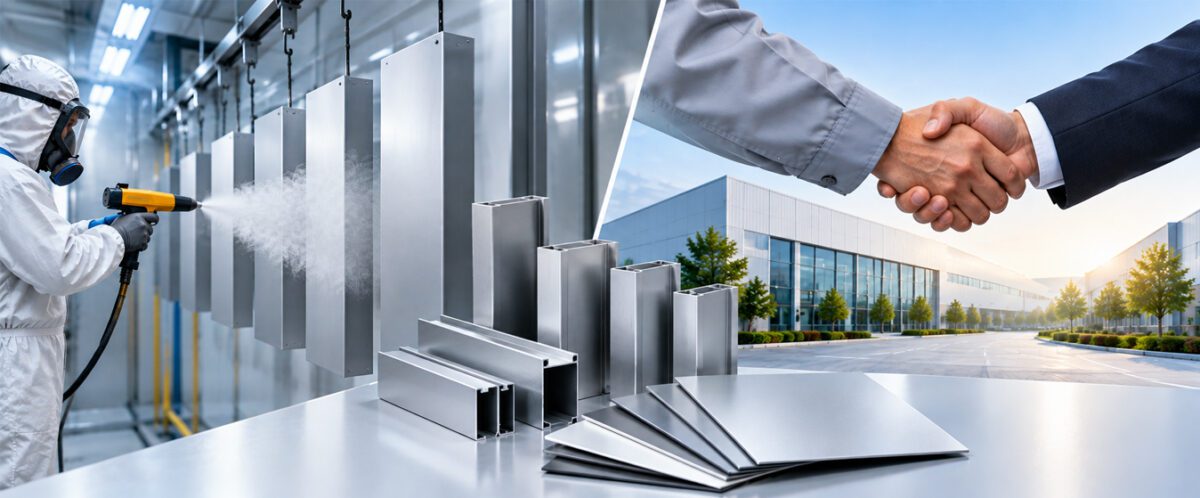
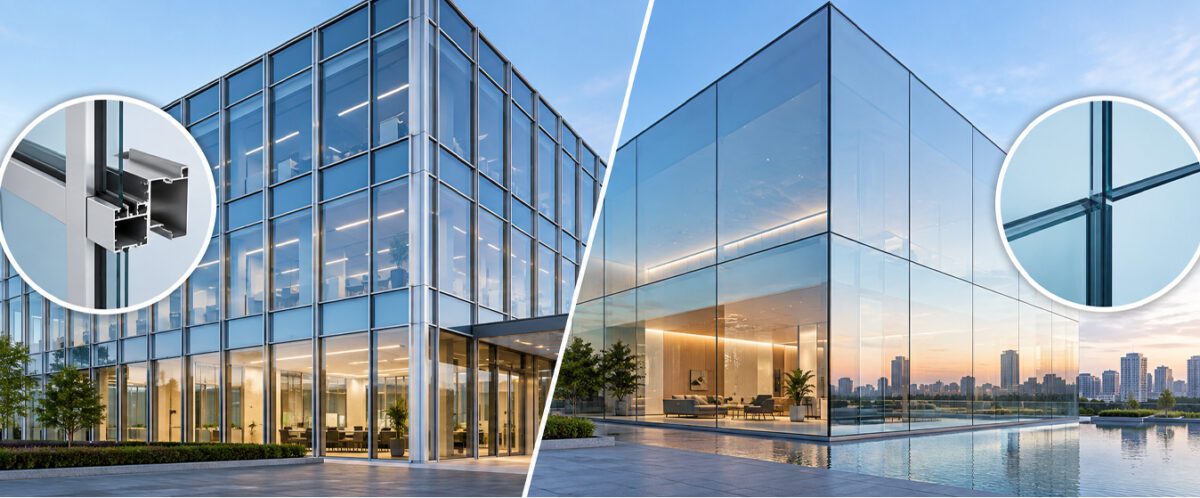
Different projects use different formats. Some rely on aluminium cladding panels for a solid, consistent finish. Others go with curtain wall systems, where glass plays a bigger role. Larger developments often prefer unitized systems since parts are fabricated in advance and installed quickly. For smaller or more customised work, stick-built methods still come into play.
The key point is control. These facade systems are designed to behave predictably, not left to chance.
Traditional materials add significant structural load, affecting design efficiency and increasing foundation requirements.
Labour-intensive processes extend construction timelines and reduce on-site efficiency.
Exposure to sun, rain, and humidity leads to cracking, fading, and surface deterioration over time.
Porous materials retain water, increasing the risk of seepage, staining, and long-term damage.
Limited thermal resistance results in higher indoor heat gain and increased dependency on cooling systems.
Regular repairs and surface treatments are required to maintain appearance and performance.
Rigid material properties restrict flexibility in achieving modern or complex architectural forms.
A direct comparison makes things clearer.
| Parameter | Aluminium Facade Systems | Traditional Materials (Brick/Stone/Concrete) |
| Weight | Lightweight, reduces structural load | Heavy, increases load and foundation requirements |
| Installation | Faster, often prefabricated systems | Time-consuming, labor-intensive |
| Design Flexibility | High, supports complex and modern designs | Limited to standard forms and finishes |
| Weather Resistance | Corrosion-resistant, non-porous | Prone to cracking, moisture absorption, deterioration |
| Energy Efficiency | Compatible with insulation and glazing systems | Limited thermal performance |
| Maintenance | Low maintenance over time | Frequent repairs and upkeep required |
| Sustainability | Recyclable, supports green building goals | Lower recyclability and higher environmental impact |
It is not just about better performance on paper. The difference shows up during construction and continues long after the project is complete.
Working with lighter materials changes how a site functions. Movement becomes easier. Installation moves faster. At the same time, the load on the structure reduces, which gives engineers more room to optimise.
Aluminium manages this balance well. It stays light but doesn’t compromise on strength.
In Indian climates, temperature control is a real concern as it affects long-term costs.
Aluminium glass facade systems, when paired with insulated panels and glazing, help stabilise indoor conditions. Heat gain reduces in summer. Heat loss slows down in winter. The difference might not be dramatic in a single day, but over time, it adds up.
Buildings face constant exposure to sun, rain, and humidity, and there’s no pause.
Aluminium holds up well under these conditions. It doesn’t absorb moisture. It resists corrosion. Even after years, it maintains both structure and finish without visible deterioration.
That reliability matters, especially for projects designed to last.
This is where aluminium becomes especially useful. It adapts easily.
Complex forms, clean edges, and large panels are easier to achieve without overcomplicating the process. Finishes also open up possibilities. Different textures, colours, and coatings allow designers to stay true to their vision.
There’s flexibility without losing control.
Sustainability has become part of the conversation across projects. Aluminium fits naturally into that shift.
It can be recycled fully and reused without losing quality. Combined with improved energy performance, it supports long-term efficiency goals.
It’s not just about reducing impact today. It is about thinking ahead.
On-site performance tells the real story.
With proper sealing, air leakage stays under control. Water ingress becomes less of an issue when detailing is done right. Interiors feel more stable, even during extreme weather.
Maintenance requirements also drop. Cleaning is straightforward. Repairs, when needed, are usually localised rather than extensive.
Prefabrication helps too. Components arrive ready, reducing on-site delays and improving coordination.
Over time, the system continues to perform without demanding constant attention. That consistency is what makes a difference.
Used to create clean, modern exteriors with consistent performance across large elevations.
Enhances visibility and supports open, visually appealing storefront designs.
Provides durability and uniformity in high-rise apartment developments.
Allows selective use in villas to highlight design features and elevations.
Suitable for hospitals due to low maintenance and long-term reliability.
Used in schools and institutions for durable, performance-driven exteriors.
Adapts well to projects combining commercial, residential, and public spaces.
Execution is where things either come together or fall apart.
Alignment has to be precise. Sealing must be complete. Joints should be treated carefully to avoid weak points.
Waterproofing and drainage need to be planned, not fixed later. Structural fixing has to be accurate to ensure stability.
Coordination across teams becomes essential. When design and execution stay aligned, the system performs the way it’s supposed to.
Aluminium glass facade systems offer a practical balance. They meet design expectations without compromising on performance.
They reduce load, improve efficiency, and give architects more freedom to work with. More importantly, they continue to perform over time without demanding constant intervention.
Choosing the right system still comes down to clarity, understanding the project, the environment, and long-term needs.
For projects where facade performance and execution quality matter, working with experienced facade manufacturers like Aparna Externa can help bring that clarity into the final outcome.
Aluminium facade systems work well for both. In renovation projects, they can be installed over existing structures to upgrade appearance and performance without major structural changes.
Aluminium itself is non-combustible, but overall fire performance depends on the complete system design, including core materials, insulation, and compliance with fire safety standards.
Yes, these systems can be designed to integrate with glazing, shading devices, ventilation systems, and even solar panels, depending on project requirements.