
Why do some modern buildings instantly stand out while others still feel heavy and closed from the outside?
Many traditional exterior walls block natural light and restrict architectural creativity. In large commercial or high-rise buildings, this often results in darker interiors, bulky facades, and limited design flexibility. Over time, these limitations can affect both the building’s visual impact and its overall performance.
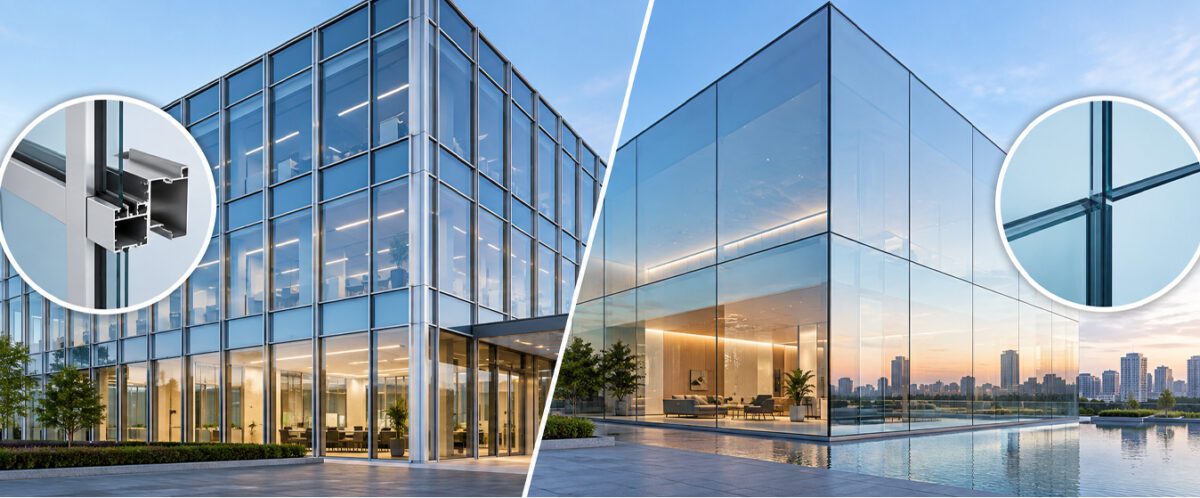
A glass curtain wall system solves this challenge by replacing heavy exterior walls with a lightweight glazed façade. It allows natural light to enter interiors, improves the building’s appearance, and protects it from environmental elements. Today, the curtain wall system has become a defining feature of modern architectural design.
A glass curtain wall system is an exterior facade that attaches to the structural frame of a building but does not carry the building’s structural load. Instead, it acts as a protective outer layer that shields the building from environmental conditions such as wind, rain, and temperature changes.
Unlike traditional masonry walls, curtain walls are lightweight. Engineers design them to transfer loads such as wind pressure to the building’s structural framework.
Several components work together to form this facade system:
When assembled properly, these elements create a durable envelope that protects the building while maintaining visual openness.
Today, most modern facades rely on the aluminium glass curtain wall system. Aluminium frames provide strength without adding excessive weight, which makes them ideal for supporting large glass panels used in urban architecture.
In earlier forms of construction, exterior walls supported the entire weight of the building. Thick masonry walls were necessary to carry loads, which limited window sizes and design flexibility.
The introduction of steel and reinforced concrete structures changed the way buildings were designed. Structural frames began carrying the building’s load internally, freeing the exterior walls from structural responsibilities.
This shift allowed architects to rethink facades completely.
Glass and metal gradually replaced heavy masonry as the preferred exterior materials. Aluminium frames allowed designers to create lightweight systems capable of supporting large glass panels without compromising structural stability.
Advancements in glazing technology further strengthened the role of curtain wall façades. Insulated glass units, laminated safety glass, and energy-efficient coatings improved thermal performance and safety.
As a result, the glass curtain wall system evolved from a purely aesthetic feature into a high-performance building envelope that improves daylight access, energy efficiency, and architectural expression.
Different construction projects require different curtain wall approaches. The system selected often depends on building height, construction schedule, and facade design.
Stick curtain wall systems are assembled piece by piece at the construction site. Workers install vertical mullions first and then add horizontal framing members and glass panels.
This method allows greater flexibility during installation. Architects often choose stick systems for smaller commercial buildings or mid-rise structures where customization may be required during construction.
However, because installation happens entirely on site, the process can take longer and requires careful coordination.
Unitised curtain wall systems use prefabricated panels manufactured in factory-controlled environments. Each unit typically contains framing, glazing, and insulation components.
Construction teams transport these modules to the site and install them directly onto the building structure.
This method significantly speeds up installation and improves quality control. For high-rise towers and large commercial developments, unitised systems are often the preferred solution.
Structural glazing systems create a seamless glass facade by bonding glass panels directly to the structural frame using high-strength silicone sealants.
Because the framing elements remain hidden, the facade appears as a continuous glass surface. Architects frequently use this system in modern commercial buildings that aim for minimal visual interruption.
The aluminium glass curtain wall system has become one of the most widely used façade solutions today.
Aluminium frames offer several advantages. They resist corrosion, support large glass panels, and remain lightweight compared to other metals. Aluminium is also easy to fabricate into custom shapes, which allows architects to create unique facade designs.
These qualities make aluminium-based curtain walls suitable for office towers, commercial complexes, and modern institutional buildings.
Curtain wall facades rely on several carefully selected materials. Each material contributes to structural performance, energy efficiency, and durability.
| Material | Role in Curtain Wall Systems | Key Benefits |
| Glass Panels | Main exterior surface allowing daylight and visibility | Transparency, natural light, modern aesthetics |
| Aluminium Frames | Structural support for glass panels | Lightweight, corrosion resistant, flexible design |
| Steel Components | Reinforcement in high-load areas | Supports larger spans and complex structures |
| Laminated Glass | Safety glazing used in façade systems | Prevents shattering and improves acoustic insulation |
| Insulating Glass Units (IGUs) | Multiple glass panes separated by air or gas layers | Enhances thermal insulation and energy efficiency |
Architects and developers increasingly choose the glass curtain wall system because it offers several practical advantages beyond aesthetics.
Glass facades give buildings a clean and contemporary appearance. Large glass surfaces reflect surrounding landscapes and cityscapes, creating visually striking structures.
Curtain walls allow natural light to penetrate deep into interior spaces. Offices, atriums, and commercial buildings benefit from brighter interiors and improved occupant comfort.
Advanced glazing technologies help regulate heat transfer. Insulated glass units and low-emissivity coatings reduce heat gain and heat loss, improving overall building efficiency.
Laminated and insulated glass solutions can reduce external noise, making curtain walls suitable for buildings located in busy urban areas.
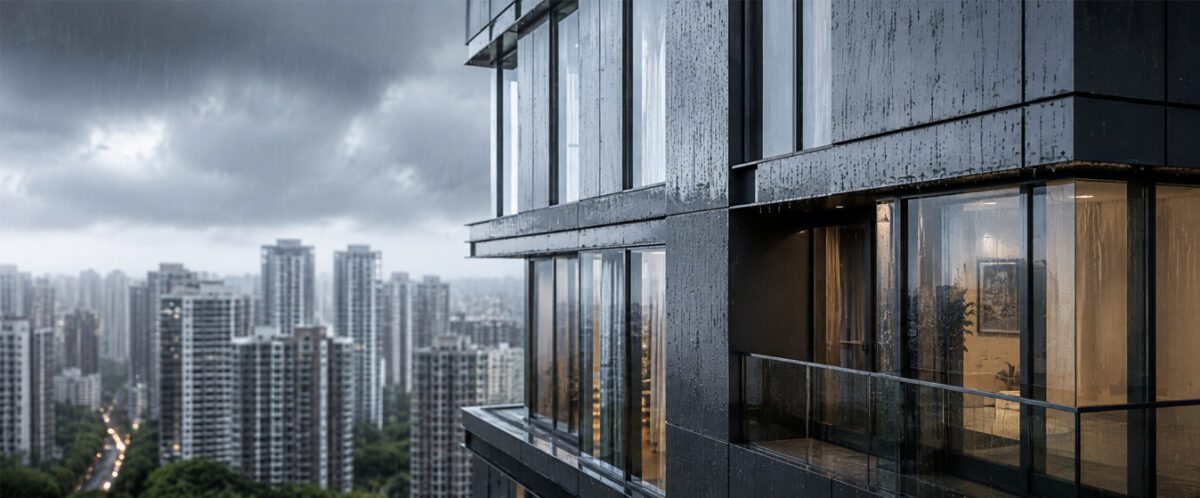
A well-designed curtain wall system protects the building against wind pressure, rain, and temperature variations. High-quality sealants and drainage systems help maintain long-term facade performance.
Curtain wall facades appear across many types of modern buildings because they combine design flexibility with strong performance.
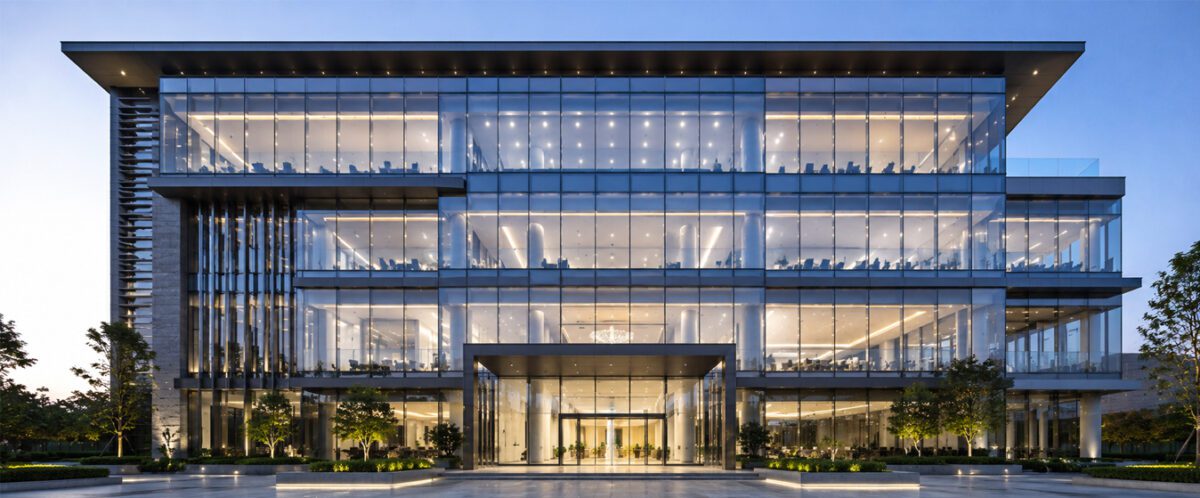
Corporate headquarters and office towers commonly use curtain walls to create modern and professional building exteriors.
Airports often use large glass façades to maximise daylight and create open interior spaces that improve passenger experience.
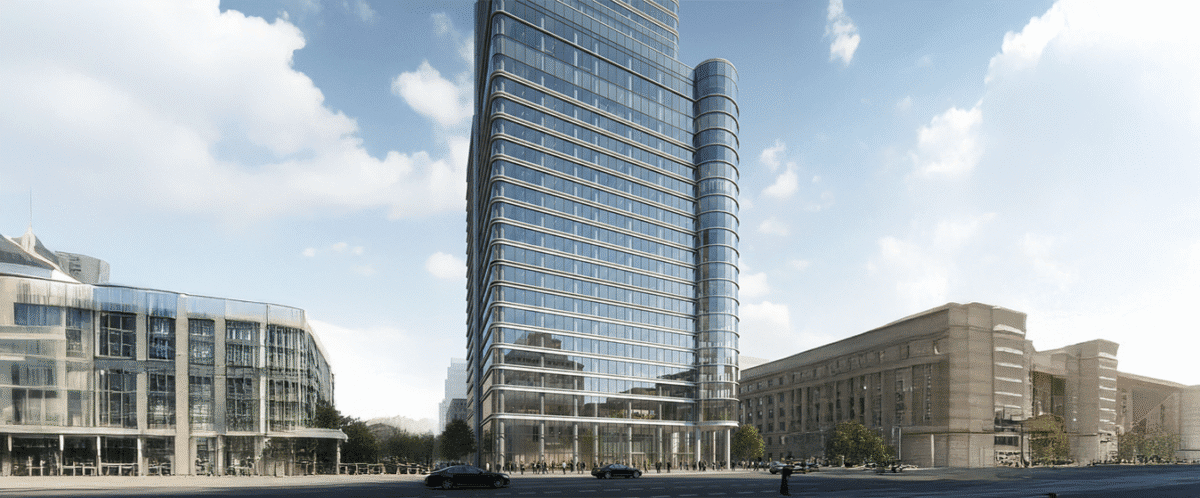
For tall buildings, curtain wall systems provide a lightweight exterior envelope that can handle wind loads without placing additional weight on the structure.
Museums, hotels, convention centres, and educational institutions often use curtain walls to create visually distinctive architecture.
Designing an effective glass curtain wall system requires careful coordination between architects, facade engineers, and construction teams.
Climate conditions influence glazing selection, shading strategies, and insulation requirements. Solar control glass can reduce heat gain in warmer climates, while insulated glazing improves performance in cooler regions.
Buildings expand and contract with temperature changes. Curtain wall systems must allow for this movement without causing stress or damage to the façade.
Safety glazing, such as laminated or tempered glass, ensures that the façade meets building codes and protects occupants.
Designers must consider facade maintenance from the beginning. Access systems, durable materials, and high-quality sealants help extend the life of the curtain wall.
With proper care, many curtain wall facades perform effectively for several decades.
Selecting the right Curtain Wall System depends on the building’s structural design, project timeline, and architectural intent.
High-rise towers often use unitised systems because they allow faster installation and consistent quality. Smaller buildings may benefit from stick systems that offer greater flexibility during construction.
Climate conditions, energy efficiency goals, and budget constraints also influence the final decision.
A well-designed curtain wall facade should balance performance, aesthetics, and long-term durability.
Glass facades have become one of the defining elements of modern architecture. The glass curtain wall system allows buildings to achieve transparency, daylight access, and sleek architectural expression while maintaining strong environmental protection.
With advances in materials, glazing technologies, and façade engineering, curtain wall systems continue to evolve as high-performance building envelopes. The aluminium glass curtain wall system, in particular, offers durability, flexibility, and design freedom for modern architectural projects.
Aparna Externa brings expertise in facade engineering and construction, delivering advanced building envelope solutions including curtain walls, glass assemblies, skylights, and aluminium systems. With a focus on precision, innovation, and quality execution, the company continues to contribute to the development of high-performance facades that shape modern architectural landscapes.
Q1. How long does a glass curtain wall system last?
A well-designed glass curtain wall system can last 25–40 years or more with proper installation and periodic maintenance.
Q2. What is the difference between stick and unitised curtain wall systems?
Stick systems are assembled piece by piece on-site, while unitised systems are prefabricated in factories and installed as large panels, making installation faster.
Q3. Is maintenance required for curtain wall façades?
Curtain wall facades require regular glass cleaning, sealant checks, and inspection of joints and drainage systems to maintain performance and durability.