
What makes a building facade work beyond its appearance? It must help manage the building’s exposure to heat, rain, sunlight, dust, and external noise while supporting its overall design.
In India, these requirements vary by region, climate, and building type. The facade system must therefore be selected for both appearance and performance.
This guide covers what a building facade is, why facade design matters in India, the types of facade systems and materials used today, and how to choose the right system for a project.
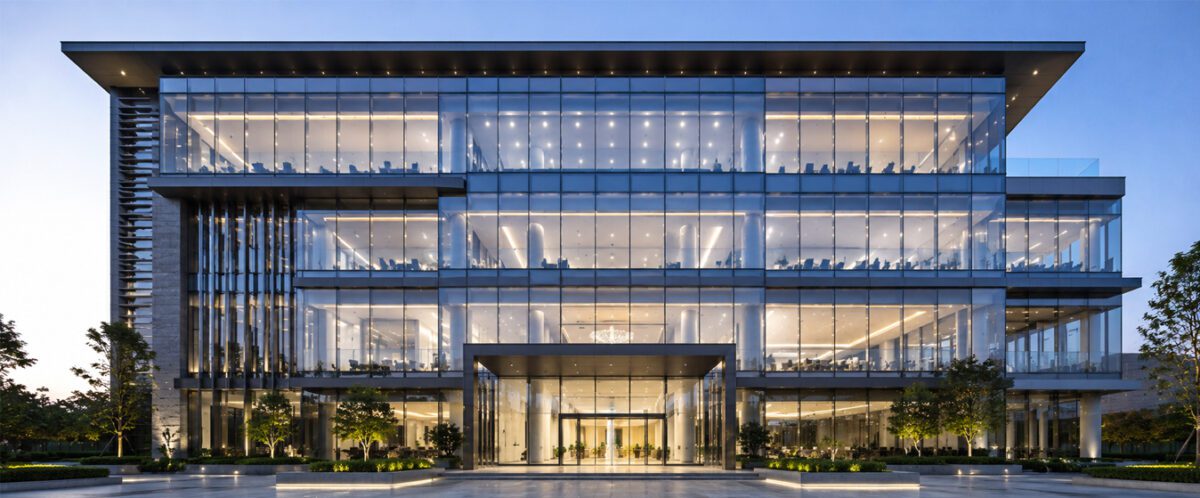
A facade is the outside surface of a building. It usually refers to the front but can also include the other exposed sides. It separates the building’s interior from the outside.
It protects the building from weather and affects heat, sunlight, daylight, and outside noise. Glass, frames, walls, insulation, joints, and drainage all contribute to how the facade works.
A facade is different from an elevation. An elevation is a drawing of one side of a building, while a facade is the actual built surface.
India has various climatic conditions in different regions. For instance, conditions in a building in Rajasthan will vary from those in a building in Kerala or Mumbai.
Glass, cladding, shading, and drainage may be influenced by exposure to sun, heavy rain, humidity, and dust. Orientation is also significant, as it will determine the amount of direct sunlight received on each elevation of the building.
With this in mind, one should consider the building’s location and the local climate when deciding which system to implement on the facade.
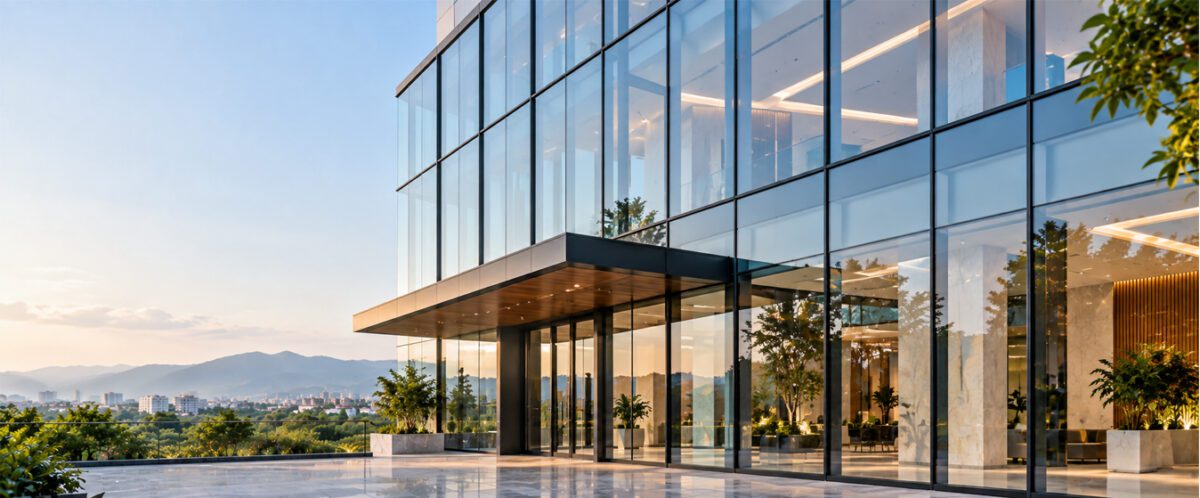
Aluminium and glass curtain walls use lightweight aluminium frames with glass panels fixed to the building structure. They are common in commercial buildings and modern architecture, particularly where large glazed areas are required.
The glass specification is important in India’s climate. Solar control and other high-performance glazing options can help manage heat and glare while maintaining natural light.
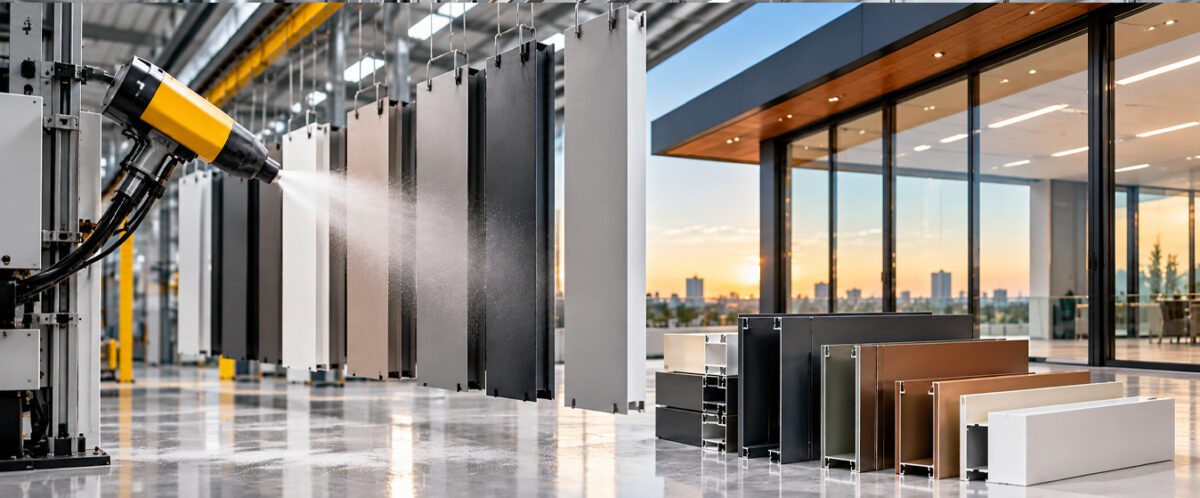
Aluminium cladding covers the building’s exterior with lightweight panels fixed to a supporting framework. It is available in different finishes and can be used across residential, commercial and institutional buildings.
It can be combined with glass, stone and other materials to create different exterior facade designs. Proper joints, fixings and detailing are important to accommodate movement and prevent water-related issues.
Suspended glass assemblies use glass panels supported by a structural system with minimal visible framing. They are often used at entrances, feature walls, and other areas where clear views and transparency are important.
With minimal visible framing, these systems can create a clean, transparent appearance.
Screens, fins and louvres are used to reduce direct sunlight, control glare and provide privacy. They also add depth to otherwise flat building exteriors.
These systems can draw from traditional Indian jaali patterns while using modern materials and fabrication methods. Their placement should follow the building’s orientation and sun exposure.
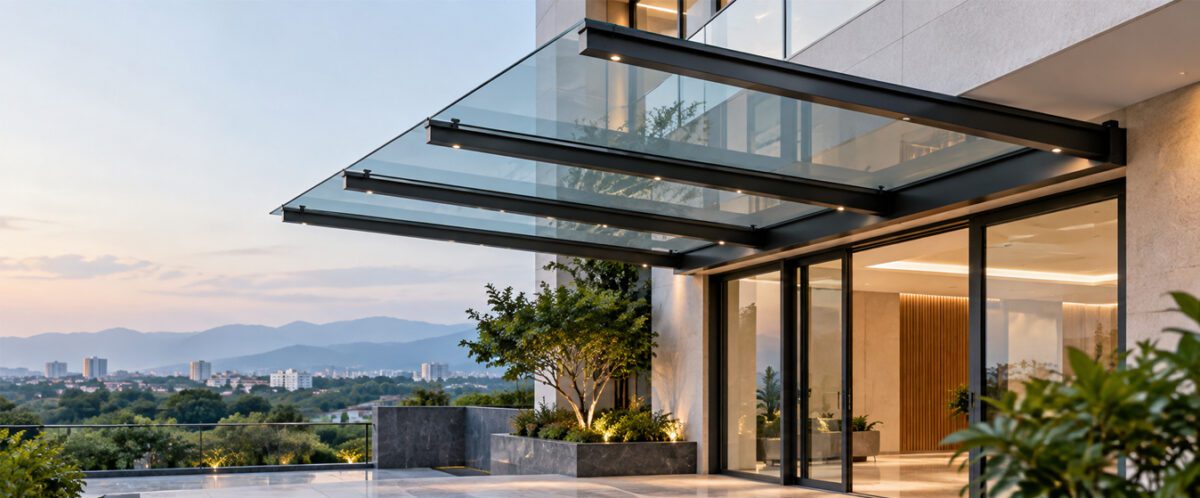
Skylights bring daylight through the roof, while glass canopies provide cover from sun and rain at entrances, walkways, and other exposed areas.
Both systems can be integrated with the main facade to add daylight and weather protection without blocking the view.
Modern facade design India uses multiple materials rather than relying on one finish.
The appropriate modern facade systems are determined by the building and its location, rather than appearance alone. Consider the following factors before making a selection:
A building facade defines the exterior while protecting the spaces behind it. Effective modern facade design balances appearance with climate response, material performance, engineering, and maintenance.
For buildings in India, the right system should respond to the site’s conditions and the building’s requirements. Aparna Externa offers facade solutions for contemporary architectural projects, including aluminium and glass curtain walls, aluminium facades, suspended glass assemblies, skylights and glass canopies.
Common types of facade system include aluminium and glass curtain walls, aluminium cladding, suspended glass assemblies, screen and shading systems, skylights and glass canopies The appropriate system depends on the building type, location, orientation and performance requirements.
Start with the building’s location, orientation and function. Then evaluate thermal and acoustic performance, weather resistance, structural requirements, maintenance, design and budget before selecting a facade system.