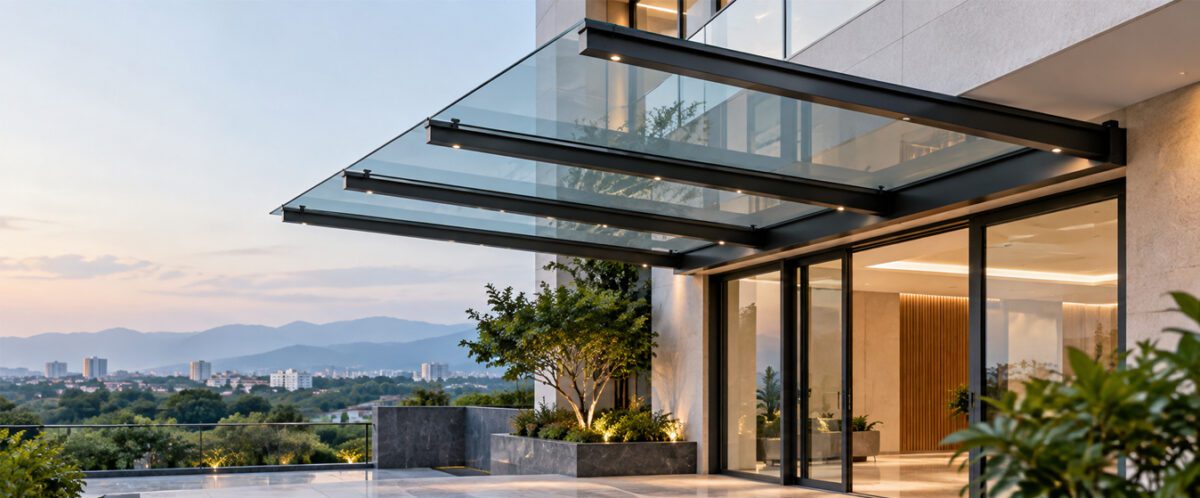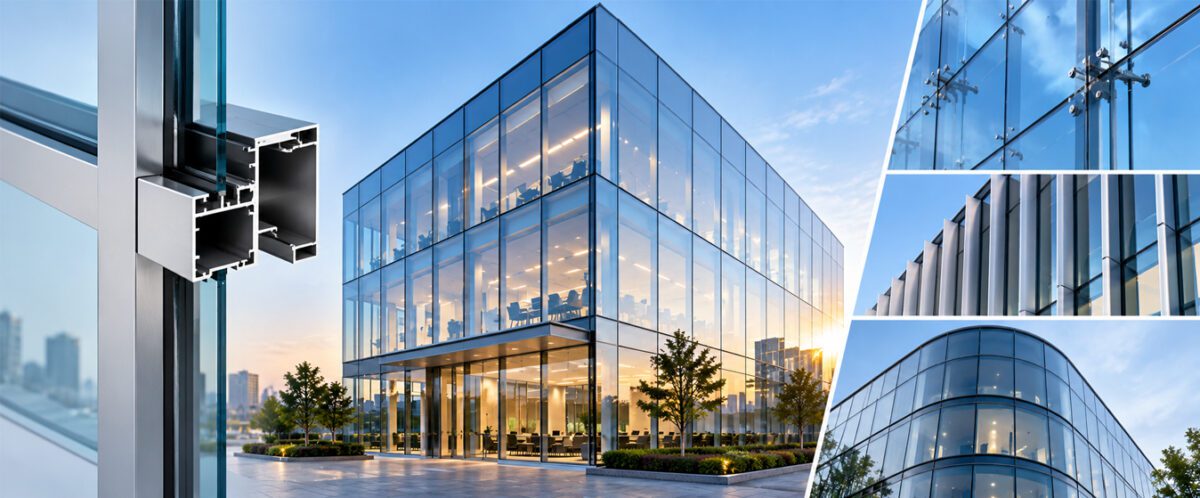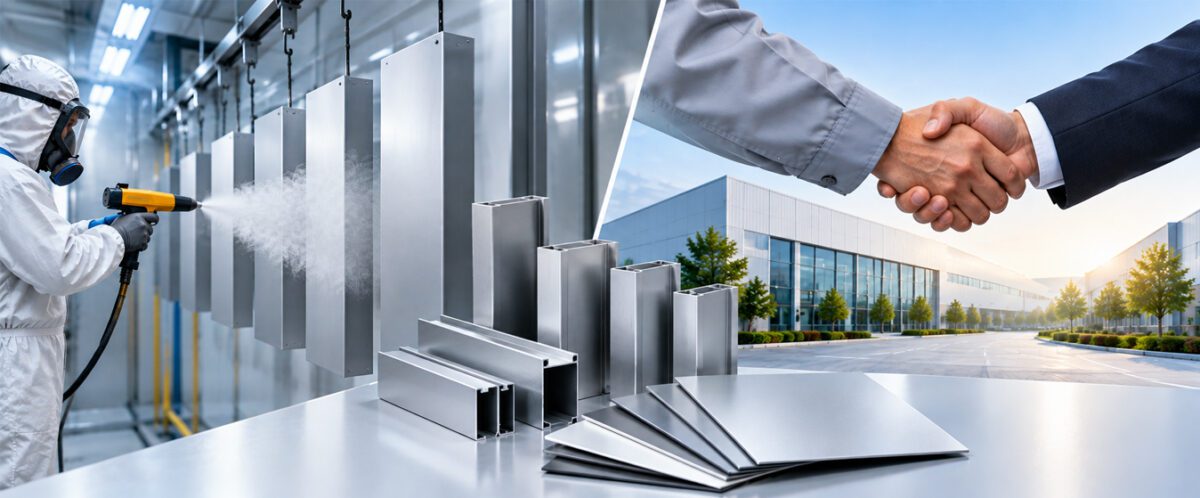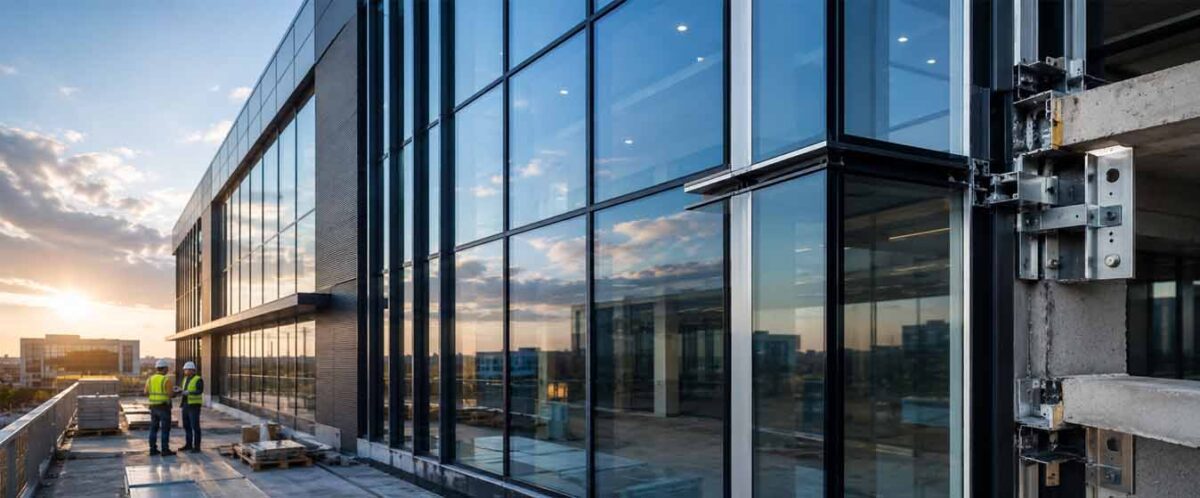
Today’s commercial spaces are expected to be energy-efficient, weather-resistant, durable, and comfortable for occupants. One solution that helps achieve all these goals is an aluminium glass curtain wall system.
From corporate offices and shopping malls to hospitals and educational institutions, curtain walls have become a defining feature of contemporary building design. Their sleek appearance, ability to maximise natural daylight, and excellent structural performance make them a preferred facade solution for architects and developers alike.
However, installing a glass curtain wall system isn’t as simple as selecting aluminium frames and glass panels. Its long-term performance depends on careful planning, engineering, fabrication, installation, and maintenance. Even small mistakes during these stages can lead to water leakage, structural issues, higher maintenance costs, and reduced energy efficiency.
The good news? Most of these problems are entirely preventable.
In this article, we will look at the most common mistakes to avoid when designing and installing a curtain wall system, along with practical tips to ensure your exterior curtain wall system delivers reliable performance for years to come.
An aluminium glass curtain wall system does much more than enhance the appearance of a building. It acts as the building’s protective envelope, shielding interiors from wind, rain, heat, and other environmental factors while allowing ample natural light inside.
When planned correctly, a curtain wall system can offer several long-term benefits, including:
However, these benefits can only be achieved when the system is carefully designed, engineered, and installed. Even a small oversight during planning can affect the overall performance of the facade and lead to expensive repairs in the future.
No two buildings behave the same way, yet this is one of the most common mistakes made during facade planning.
Every project has unique requirements influenced by factors such as:
For example, a high-rise office tower in a coastal city experiences significantly different wind pressures than a mid-rise commercial building in an inland location. Applying the same glass curtain wall system to both projects without proper engineering can lead to performance issues over time.
A project-specific approach allows engineers to optimise the facade for its environment, improving safety, durability, and long-term performance.
Every curtain wall system is exposed to different forces throughout its lifespan. If these forces aren’t accurately calculated during the design stage, the facade may not perform as intended.
Some of the key loads engineers evaluate include:
When these calculations are overlooked, several issues can arise:
Proper structural engineering ensures every component has the required strength and stiffness to withstand these forces safely.
The quality of the aluminium framing has a direct impact on the strength and longevity of a glass curtain wall system.
Unfortunately, profile selection is sometimes driven primarily by cost rather than performance.
When selecting aluminium profiles, several factors should be considered:
Profiles that lack sufficient strength may flex under wind pressure, causing visible deflection and placing additional stress on glass panels. Over time, this can affect both the appearance and structural integrity of the facade.
Similarly, poor-quality aluminium may be more susceptible to corrosion, particularly in coastal or high-humidity environments.
Choosing high-performance aluminium profiles that are engineered for the project’s structural requirements helps create a safer, more durable exterior curtain wall system capable of withstanding changing environmental conditions.
Buildings are never completely stationary. Throughout their lifespan, they experience continuous movement due to environmental and structural factors.
Some of the most common causes include:
If these movements are not considered during the design of the curtain wall system, stress begins to build up within the facade.
This often results in:
To prevent these issues, engineers incorporate movement joints, flexible anchors, and expansion allowances that allow the facade to respond naturally without compromising its structural integrity.
Glass contributes significantly to the safety, energy efficiency, acoustic comfort, and overall performance of the facade.
Choosing the wrong glazing specification is one of the most common mistakes in a glass curtain wall system.
Glass selection should be based on several project-specific requirements, including:
Using glass that doesn’t meet these requirements can lead to several problems, including glass racking, excessive thermal stress, poor insulation performance, and increased energy consumption.
It’s equally important to ensure the glazing system is compatible with the aluminium framing and support system. A well-designed combination of aluminium profiles and glass helps distribute loads evenly while maintaining the facade’s long-term stability and performance.
Ultimately, selecting the right glazing is about creating a facade that performs efficiently under real-world conditions.
Do you know that the best-designed aluminium glass curtain wall system can fail if it is installed poorly?
During installation, every frame, anchor, and glass panel must be positioned accurately. Small errors at this stage can create much bigger problems once the building is in use.
Some of the most common installation mistakes include:
These mistakes can affect both the appearance and performance of the facade. Misaligned components may place extra stress on the glass, create gaps around joints, or make it easier for water to enter the building.
Working with experienced installers and checking the work at every stage helps avoid these issues.
Pro Tip: Never assume that a good design alone guarantees a high-performing facade. Proper installation is equally important.
Keep these best practices in mind throughout your project:
The performance of an aluminium glass curtain wall system is optimal when all the work, from design and material selection to the installation and maintenance, is carried out without any errors. Common pitfalls can be avoided to increase the safety, energy efficiency, and lifespan of a facade.
Choosing the right facade partner is just as important. Aparna Externa delivers high-performance curtain wall systems backed by advanced engineering, precision manufacturing, and expert execution. Reach out to our team to find the right exterior curtain wall system for your next commercial project.
Q1. How long does an aluminium glass curtain wall system last?
A well-designed and properly maintained aluminium glass curtain wall system can last for several decades. Regular inspections and timely maintenance help preserve its appearance and performance.
Q2. What are the common causes of curtain wall failures?
Common causes include poor structural design, incorrect installation, inadequate sealing, blocked drainage systems, and lack of regular maintenance. Most of these issues can be prevented with proper planning and quality execution.
Q3. How do I choose the right curtain wall system for my building?
Consider factors such as building height, location, wind loads, energy efficiency, aesthetics, and project requirements. Working with an experienced facade manufacturer helps you select the most suitable curtain wall system.