
Did you know that buildings consume nearly 30% of the world’s total energy, according to the International Energy Agency (IEA)? That’s one reason why modern commercial buildings are being designed to do more than just look impressive. They also need to be energy efficient and built to perform in different weather conditions.
An exterior curtain wall system helps achieve both. It gives buildings a sleek, modern look while improving natural light, weather protection, and performance, making it a popular choice for today’s commercial projects.
The demand for curtain wall systems continues to grow worldwide. In fact, the global curtain wall market is projected to reach over USD 104.2 billion by 2030, driven by the rise in commercial construction and demand for energy-efficient buildings.
An exterior curtain wall system is a non-load-bearing façade fixed to the outside of a building. Instead of carrying the building’s structural load, an exterior curtain wall system transfers its own weight and wind loads to the building’s structural frame while protecting the interiors from wind, rain, heat, and dust.
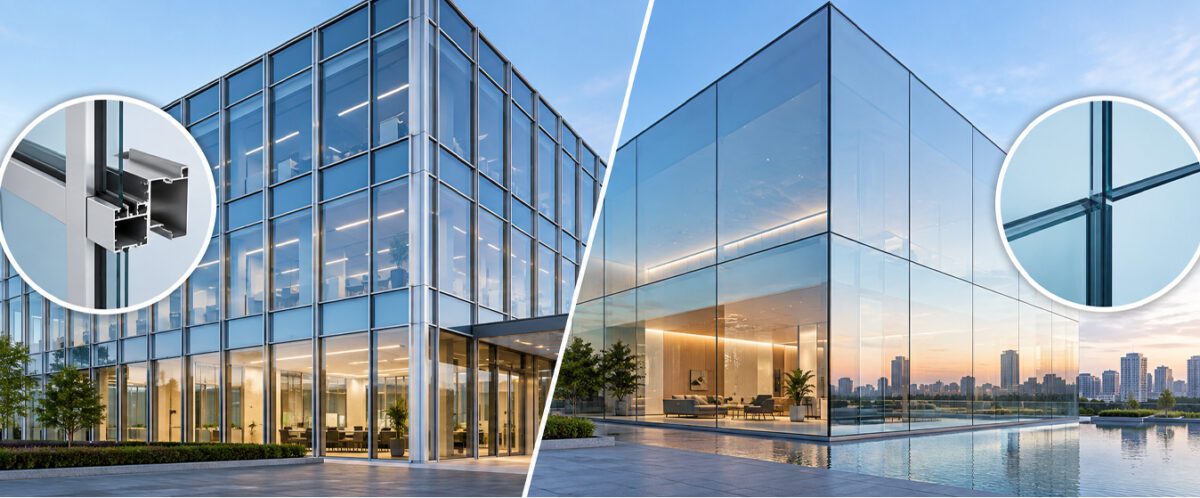
Most curtain wall systems use aluminium frames with glass, metal, or composite panels, with the aluminium glass curtain wall system being a preferred choice for commercial buildings due to its durability, lightweight construction, and design flexibility.
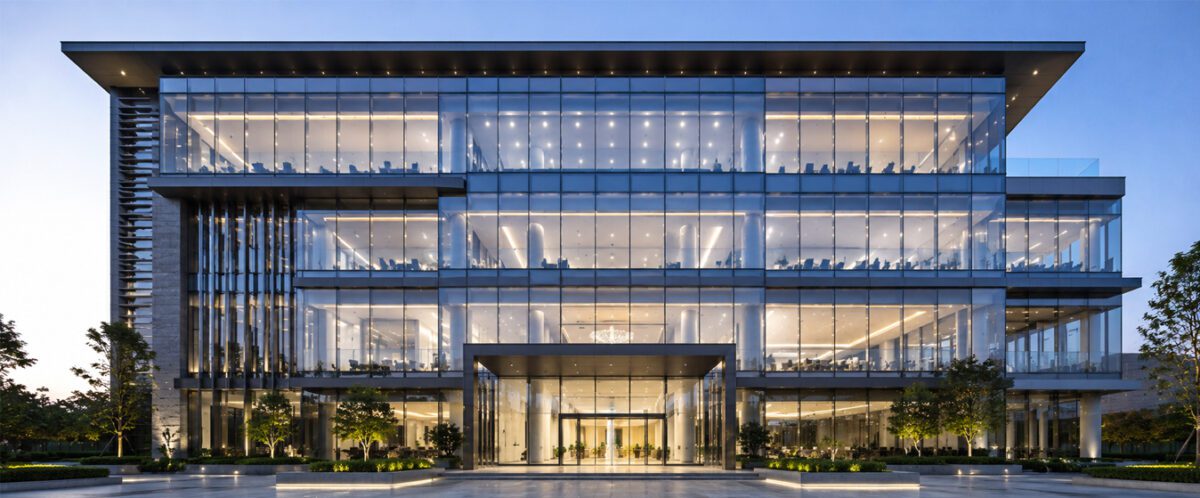
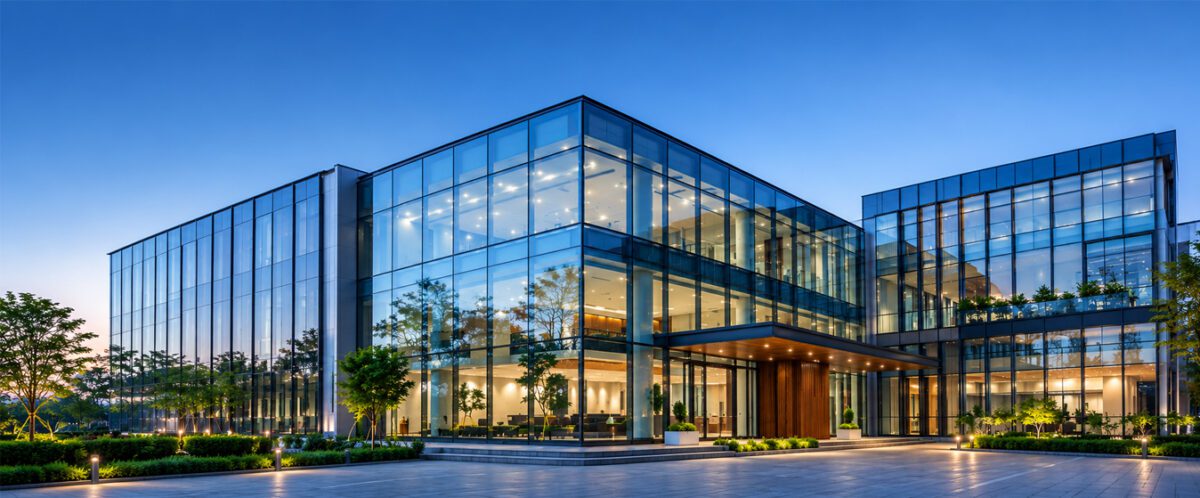
A curtain wall system gives commercial buildings a clean and elegant appearance with large glass panels and slim aluminium frames. It helps architects create attractive façades for offices, hotels, shopping centres, and other commercial spaces.
Large glass panels bring more daylight into interior spaces. This creates brighter work areas and reduces the need for artificial lighting during daytime hours.
When designed with appropriate glazing and thermal breaks, it can reduce the load on heating and cooling systems and improve overall energy performance.
Curtain wall systems create a protective outer layer around the building. They shield interiors from wind, rain, dust, and moisture while maintaining the strength of the building envelope.
Curtain wall systems use lightweight materials such as aluminium and glass, which place less pressure on the building structure. They provide the required strength and durability for commercial projects.
An exterior curtain wall system works well across different commercial spaces:
A unitised curtain wall system is manufactured in a factory as complete panels and then transported to the construction site for installation. Since most of the work is completed off-site, installation becomes faster and more efficient.
This system is widely used for high-rise offices and large commercial developments where speed, consistency, and quality are key priorities.
A stick-built curtain wall system is assembled at the construction site using individual aluminium sections and glazing components. This approach offers greater flexibility, making it easier to accommodate customised facade designs and complex building shapes.
It is commonly specified for low- and mid-rise commercial projects where on-site adjustments may be required.
Structural glazed curtain wall systems use structural silicone to bond glass panels to the supporting frame, creating a smooth, uninterrupted glass façade with minimal visible framing.
An aluminium glass curtain wall system with structural glazing is a popular choice for corporate headquarters, premium office spaces, hotels, and commercial buildings that prioritise architectural appeal. Along with its sleek appearance, it also delivers reliable weather protection and excellent daylight performance.
A double-skin curtain wall system uses two layers of glazing separated by an air cavity. This design improves thermal insulation and reduces external noise, creating a more comfortable indoor environment.
It is often used in commercial buildings located in busy urban areas or regions with extreme weather. While the initial investment may be higher, better energy performance and long-term operating savings make it a better choice for many projects.
Each commercial project has its own design and performance requirements. Before deciding on a curtain wall system, consider the following factors:
The facade should withstand the wind loads and structural movement expected at the building’s height. High-rise developments often require systems designed specifically for these conditions.
Local weather has a direct impact on facade performance. Selecting the right glazing, framing, and weatherproofing materials helps the system perform efficiently throughout the year.
Different buildings require different levels of insulation. Offices, hotels, hospitals, and educational institutions often benefit from systems that improve thermal efficiency and reduce outside noise.
Regular cleaning and inspections keep any facade performing at its best. Choosing a system that offers easier access for maintenance can reduce long-term operating costs.
The selected exterior curtain wall system should align with the project’s budget, installation schedule, and long-term performance expectations.
Before finalising a facade system, confirm that it meets applicable building codes, safety requirements, and performance standards.
An exterior curtain wall system shapes both the appearance and performance of a commercial building. It brings together design, durability, daylight, and weather protection to create facades that meet today’s construction needs.
From offices and hotels to hospitals and retail spaces, the right curtain wall system helps buildings achieve a balance between aesthetics, durability, energy performance, and functionality. Choosing a facade system that aligns with the project’s design, climate, and performance requirements ensures long-term value and reliable performance. Aparna Externa offers precision-engineered aluminium glass curtain wall systems designed to meet the demands of modern commercial buildings.
Q1. What is the purpose of an exterior curtain wall system?
An exterior curtain wall system protects a building from wind, rain, dust, and moisture without carrying its structural load. It also improves natural daylight, energy efficiency, and the overall performance of the building.
Q2. What is the difference between a curtain wall and a load-bearing wall?
A curtain wall system is fixed to the building’s structural frame but does not support its weight. A load-bearing wall forms part of the building’s structure and carries loads from floors and the roof.
Q3. Where are aluminium glass curtain wall systems commonly used?
An aluminium glass curtain wall system is widely used in office buildings, hotels, hospitals, airports, shopping centres, and educational institutions. Its durability, weather resistance, and clean appearance suit a wide range of commercial façade applications.